Winter Maintenance Tips for Connecticut Rentals
Connecticut winters can be tough on rental properties, with freezing temperatures and unpredictable storms causing issues like frozen pipes, heating failures, and roof damage. These problems not only lead to costly repairs – sometimes over $5,000 – but also create safety risks for tenants. The key to avoiding these challenges? Preparation.
Here’s what you need to do:
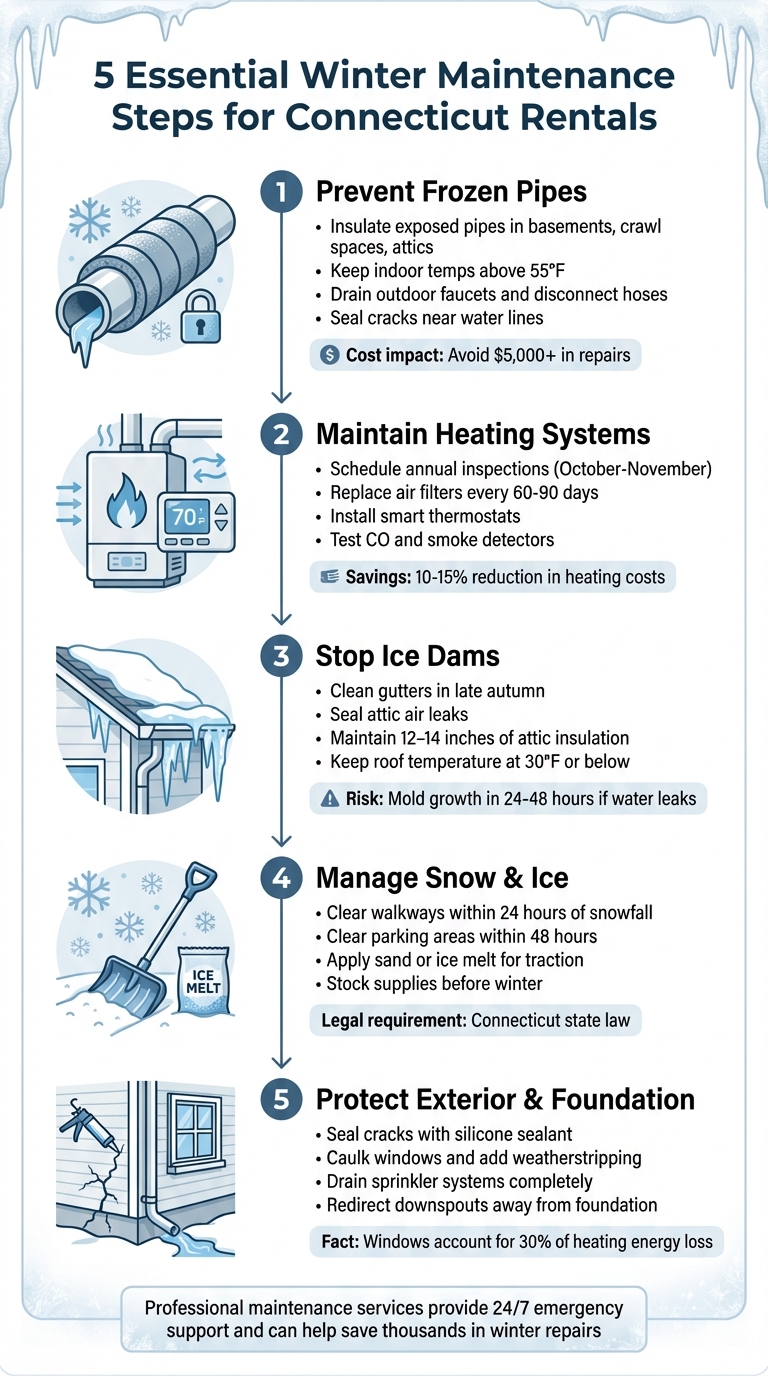
- Prevent Frozen Pipes: Insulate exposed pipes, seal cracks, and keep indoor temperatures above 55°F. Drain outdoor faucets and disconnect hoses to avoid bursts.
- Maintain Heating Systems: Schedule annual inspections, replace air filters regularly, and consider smart thermostats to save on energy costs.
- Stop Ice Dams: Clean gutters, seal attic air leaks, and ensure proper roof insulation and ventilation to prevent leaks and mold.
- Manage Snow and Ice: Clear walkways and driveways within 24 hours of snowfall to reduce liability risks and comply with Connecticut laws.
- Protect Exterior Walls and Foundations: Seal cracks, insulate windows and doors, and winterize outdoor equipment to prevent structural damage.
Professional maintenance services ct can help landlords stay ahead of these challenges by providing inspections, emergency support, and cost-effective solutions. A small upfront investment in winterization can save thousands in repairs and ensure tenant safety all season long.
5 Essential Winter Maintenance Steps for Connecticut Rental Properties
How To Winterize Your Rental Property
sbb-itb-66a7c69
How to Prevent Frozen Pipes and Water Damage
Protecting pipes from freezing isn’t just about avoiding costly repairs – it’s also about ensuring the safety and comfort of tenants during the winter months. When water freezes, it expands, and that pressure can cause pipes to burst, leading to expensive damage. This is especially true in older homes, like many found in Connecticut, which can be more vulnerable during extreme cold. Here’s how to prepare your plumbing system before the temperature drops.
Insulate Pipes and Seal Cracks
Start by insulating exposed pipes in areas like basements, crawl spaces, attics, garages, and exterior walls. Foam insulation sleeves are a great option – just slide them over both hot and cold water lines and tape the seams for a snug fit. Seal any gaps or cracks near water lines with caulk or weatherstripping, and don’t forget to install foam gaskets behind outlet covers on exterior walls to block drafts.
Uri "Ori" Pearl of Nealon Insulation advises, "Those foam sleeves from the hardware store are worth their weight in copper. Slide them over hot and cold lines alike, and tape the seams for full coverage."
Check for drafts around pipes and seal any openings you find. According to Pearl, "silicone sealant holds up best through New England’s freeze-thaw cycles."
Inside the home, keep your thermostat set to at least 55°F – even in unoccupied units – and open cabinet doors under sinks to allow warm air to circulate around hidden pipes. Leaving interior doors ajar also helps maintain consistent warmth. During extreme cold (below 20°F), let a small trickle of water flow from faucets connected to vulnerable pipes.
Pearl explains, "Moving water doesn’t freeze easily; it’s a plumber’s best-kept secret."
Connecticut Water adds, "The cost of extra water is low compared to the cost of repairing a broken pipe."
Once your indoor pipes are secure, it’s time to focus on outdoor water sources.
Drain Outdoor Faucets and Disconnect Hoses
Outdoor faucets and hoses are common culprits when it comes to frozen pipes. Water left in these areas can freeze and expand, leading to cracks or bursts. To prevent this, locate the internal valve that controls your outdoor faucets and shut it off. Then, open the outdoor spigots to drain any remaining water. Be sure to disconnect and store garden hoses in a garage or basement.
For added protection, place insulated covers over outdoor spigots. If your property has a sprinkler system, use compressed air to clear out the underground lines – trapped water can freeze and cause major issues. For outdoor water meters, make sure the meter pit lid is securely closed. If snow covers the area, leave it in place – snow acts as a natural insulator.
Finally, ensure that both you and your tenants know where the main water shut-off valve is located. In the event of a burst pipe, shutting off the water quickly can significantly reduce damage.
Keeping Heating Systems Running Efficiently
When a heating system fails in January, it’s more than just an inconvenience – it can lead to serious legal and financial headaches. In Connecticut, for example, landlords must follow Connecticut property management laws by providing working heating systems that maintain safe temperatures during the colder months. If you don’t, tenants could recover up to two months’ rent or double their actual damages. Beyond avoiding legal trouble, keeping your heating system in good shape also lowers energy bills and extends the life of your equipment.
Schedule Annual Heating System Inspections
Avoiding a mid-winter heating emergency starts with routine maintenance. Schedule a professional inspection well before the cold weather hits. Ideally, have your furnace or boiler serviced in October or early November, when HVAC professionals are less busy and rates are typically lower. Spending a few hundred dollars on annual maintenance is a smart trade-off compared to the thousands you might shell out for emergency repairs or a full system replacement during a deep freeze.
During these inspections, a licensed HVAC technician will handle tasks like lubricating moving parts, cleaning components, checking ductwork, and testing thermostats. If your property has radiators, bleeding them to remove trapped air is critical for ensuring even heat distribution.
"By getting the furnace updated every winter you can easily add years to its life", says CT Homes LLC.
Don’t stop at the heating system itself. Check attic insulation and inspect air ducts for leaks or blockages that can sap heat and force your system to work harder. This is also the perfect time to test carbon monoxide and smoke detectors, as heating season brings a higher risk of CO poisoning.
Replace Air Filters and Install Smart Thermostats
While professional inspections are essential, regular self-maintenance also plays a big role in keeping your heating system efficient. One of the simplest tasks you can do? Replace air filters regularly. When filters get clogged, your system has to work harder, which not only drives up energy costs but also shortens the system’s lifespan.
Uri "Ori" Pearl of Nealon Insulation notes, "A clogged filter forces your furnace to work harder and burn more fuel".
Aim to replace filters every 60–90 days, and check them monthly during heavy winter use. A professional tune-up can also help you save 10% to 15% on heating costs.
Upgrading to smart thermostats is another effective way to improve efficiency. These devices let you control property temperatures remotely, which is particularly useful for vacant units or last-minute showings. Smart thermostats can ensure temperatures don’t drop below 55°F, preventing frozen pipes. Some models even adjust heating based on occupancy, so you’re not wasting energy on empty spaces.
Finally, remind tenants to keep vents clear of furniture and to report heating issues as soon as they arise. Addressing problems early can prevent them from becoming bigger, more expensive headaches.
Stopping Ice Dams and Roof Damage
Ice dams form when melting snow refreezes along the edges of a roof, trapping water that seeps under shingles and causes leaks. This trapped moisture can lead to mold growth in as little as 24–48 hours.
"An ice dam prevents the melting snow from draining, and that means the water has no place to go – except into the little crevices and cracks beneath the roof", says Robert Weitz, Founder of RTK Environmental Group.
To avoid ice dams, you need to keep your roof temperature at 30°F or below throughout the winter. Achieving this involves three key steps: air sealing, proper insulation, and adequate ventilation. Start by sealing air leaks around attic hatches, plumbing stacks, and chimneys with foam or caulk to keep warm air from escaping into the attic. Most building codes recommend 12 to 14 inches of fiberglass or cellulose insulation in the attic. For ventilation, there should be at least 1 square foot of vent opening for every 300 square feet of attic floor space. Once your roof is insulated and ventilated, ensure water can flow freely by keeping gutters and downspouts clean.
Clean Gutters and Downspouts
Clogged gutters are a major cause of ice dams. When leaves and debris block gutters, melting snow has nowhere to go and refreezes along the roof’s edge. This buildup can grow heavy enough to pull gutters away from the roof and damage the structure.
Plan to clean your gutters in late autumn, after the last leaves have fallen but before the first hard freeze. While cleaning, inspect for loose or damaged shingles that could worsen leaks. Also, make sure downspouts are clear and direct water at least 6 feet away from the foundation to avoid basement dampness.
Inspect and Repair Roofs Before Winter
In areas like Connecticut, where daytime melting is followed by nighttime freezing, water often gets pushed under shingles at the edges, creating leaks that are difficult to address once snow covers the roof. Scheduling a roof inspection in the fall allows you to fix problems like broken shingles, reseal flashing, and address weak spots before winter storms hit.
"A few simple steps, inspection, gutter cleaning, small shingle and flashing repairs are far cheaper than emergency roof repair or interior fixes in January", advises Artisan Roofing CT.
Look for cracked or curled shingles, particularly along roof valleys and eaves. Inside your attic, check for signs of trouble like dark rings, damp insulation, or musty odors on the underside of the roof deck. Trim back tree branches, keeping them at least 8 to 10 feet away from the roof to prevent scraping or debris buildup in gutters. Tackling minor repairs before winter can save you from costly damage later.
Managing Snow and Ice on Property Grounds
Taking proactive steps to manage snow and ice on your property is just as important as maintaining indoor systems. Snow-covered walkways and driveways can be hazardous, posing liability risks for landlords in Connecticut. State law holds landlords responsible for clearing snow and ice, with penalties including fines and potential injury claims that can be filed up to two years after an incident occurs.
To comply, landlords must clear walkways, driveways, and public sidewalks within 24 hours of snowfall, and parking areas within 48 hours. While single-family leases can assign this responsibility to tenants, landlords of multifamily properties are fully accountable.
"Landlords must remove snow and ice from walkways and driveways within 24 hours of a snowfall", explains the CT Property Owners Alliance.
Create a Snow Removal Plan
Preparation is key to staying ahead of winter storms. Stock up on essentials like ice melt, sand, and shovels before supplies run low. It’s also wise to arrange for a professional snow removal service in advance to ensure compliance with the 24-hour rule.
For single-family rentals, make sure your lease explicitly outlines snow removal responsibilities. Specify which areas tenants must clear – such as sidewalks, driveways, or patios – and emphasize the 24-hour deadline. Include a clause that allows you to hire a removal service at the tenant’s expense if they fail to meet their obligations. Providing tenants with local snow removal ordinances can help clarify municipal requirements.
With proper planning and clear communication, keeping outdoor areas safe during winter becomes much more manageable.
Keep Walkways and Entryways Clear
Once the snow is shoveled, apply sand or ice melt to improve traction and reduce the risk of slips. Pay attention to gutters, as clogged ones can lead to ice buildup on walkways. In some Connecticut cities, property owners are required to apply traction aids like sand or ice melt to public sidewalks.
Be prepared for emergencies by maintaining a contact list for quick responses during storms. Additionally, keep a detailed log of snow removal activities and any communication with tenants. This documentation can be a valuable defense if a liability claim arises.
Protecting Exterior Walls and Foundations
Once you’ve secured your indoor systems, it’s time to turn your attention to the exterior. Connecticut’s freeze-thaw cycles can wreak havoc on your property, as water seeps into cracks, expands, and causes structural damage. Addressing these vulnerabilities now with professional property maintenance services can save you from expensive repairs later. Plus, it ties in perfectly with your other winter maintenance efforts.
Seal Cracks and Insulate Windows and Doors
Take a walk around your property and carefully inspect for cracks in the foundation, siding, windows, doors, and vents. Pay close attention to the area where the foundation meets the building frame – this is a common spot for drafts and moisture to sneak in. For exterior applications, silicone-based sealants are your best bet, as they stay flexible even during those harsh freeze-thaw cycles.
If you spot rotted trim or siding, repair it with epoxy wood filler before sealing. For larger gaps around utility entries, expanding insulating foam works wonders – it keeps out both cold air and pests. Did you know windows account for about 30% of a home’s heating energy loss? To combat this, caulk the gaps between window frames and walls, and add weatherstripping to doors. Here’s a quick test: if you can see daylight around a door frame, heat is escaping, and it needs immediate attention.
Once you’ve tackled these areas, you can shift focus to protecting outdoor elements.
Winterize Outdoor Equipment and Landscaping
Trim any tree branches that could damage your roof during storms, and remove window AC units to prevent stress on the frames. For wall-mounted units, drain them and cover them with insulated covers. Fully drain your sprinkler system – this step is critical to avoid burst pipes that could leak onto your foundation.
Redirect downspouts so they discharge several feet away from your foundation to prevent water from pooling and freezing. Store patio furniture, grills, and other outdoor items in a shed or garage to keep them safe from the elements and prevent them from becoming wind-blown hazards. These straightforward steps not only protect your property from winter damage but also help reduce the risk of water infiltrating your foundation.
Working with Professional Maintenance Services
Once you’ve taken care of basic winterization steps, professional maintenance services can add an extra layer of protection for your property. Handling all the details yourself can quickly become overwhelming, which is why many property owners turn to professional management for reliable, stress-free support.
Preventative Maintenance and 24/7 Emergency Support
The goal of professional maintenance services is to address potential problems before they turn into costly repairs. Regular inspections of both the interior and exterior can catch issues like roof damage, clogged gutters, or worn-out HVAC systems early. This is especially important in Connecticut, where the state’s average 45 inches of annual rainfall can make winter even tougher. Routine gutter cleaning and roof checks are essential to avoid water damage and mold buildup.
Then there are the emergencies – like a heating system breaking down in the middle of the night or a burst pipe during a freeze. Professional services provide 24/7 emergency support, so you’re not scrambling for help at odd hours. They often have a network of licensed and insured contractors, and the ability to secure wholesale rates helps keep costs in check. This setup ensures that emergencies are handled quickly and efficiently without breaking the bank.
Full Management Plans with Winter Maintenance Features
For property owners who want a comprehensive solution, full management plans offer more than just routine maintenance. These plans include features like digital tools for oversight and predictable budgeting. For example, Idoni Management provides a Full Management plan at 10% of monthly rent. This plan covers annual inspections, maintenance coordination, rent collection, and a 24/7 emergency hotline. Their services are tailored to meet Connecticut’s winter demands in cities like Bridgeport, Stamford, Waterbury, Hartford, and New Haven.
With an online portal, landlords can track maintenance activities, approve repairs, and access weekly performance reports – all without the daily hassle. By leveraging a network of cost-effective contractors and implementing eviction prevention strategies, these plans can help stabilize budgets. For instance, a professional furnace tune-up can lower heating costs by 10–15%, while proper insulation can reduce annual heating bills by another 15%. These savings often offset the cost of the management fee, making it a smart investment for many property owners.
Conclusion
Taking care of winter maintenance is crucial for protecting your property and ensuring tenant safety during Connecticut’s bitterly cold months. Often, the difference between a small fix and a costly disaster lies in how well you prepare. Skipping winterization can lead to burst pipes, roof leaks, or HVAC breakdowns. On the other hand, having a solid maintenance plan in place can help you avoid unexpected expenses and keep things running smoothly all season long.
Connecticut’s winters are no joke, and they require consistent attention. Simple steps like keeping vacant units heated to at least 55°F, insulating exposed pipes, and clearing out gutters before the first freeze can make a big difference in safeguarding your property.
When managing multiple units or simply wanting extra peace of mind, professional help can be a game-changer. Companies like Idoni Management provide comprehensive winter maintenance services. Their Full Management plan, priced at 10% of monthly rent, covers annual inspections, 24/7 emergency response, and coordination with trusted contractors. Whether it’s an unexpected heating failure or ice dams threatening your roof, they’ve got you covered.
FAQs
What’s the best way to prevent ice dams on my rental property’s roof during winter?
Ice dams occur when heat escapes from your living spaces into the attic, causing snow on the roof to melt and then refreeze along the colder edges. This process can create a buildup of ice that forces water to back up under the shingles, potentially causing serious damage to your property. Preventing ice dams is crucial – not just to protect your investment but also to keep your tenants comfortable during the winter.
To tackle ice dams effectively, pay close attention to attic insulation, ventilation, and sealing. Start by ensuring the attic floor is well-insulated (aim for at least R-19 or higher). Seal any gaps around pipes, wiring, or vents to prevent warm air from escaping into the roof space. Proper ventilation is also key – install continuous soffit vents and a ridge vent to promote airflow, with at least 1 square foot of venting for every 300 square feet of attic area. Additionally, direct all exhaust ducts, such as those from bathrooms, kitchens, and dryers, to the outdoors to keep warm air out of the attic. Don’t forget to clean gutters and downspouts before the first snowfall and repair any damaged shingles or flashing to ensure meltwater flows away from the roof.
For extra protection, you might consider installing an ice and water shield beneath the roofing material in high-risk areas like eaves and valleys. If managing these tasks feels overwhelming, Idoni Management is available to help. They can coordinate insulation upgrades, ventilation checks, and gutter maintenance to keep your Connecticut rental property safe from ice dams all winter long.
How can I effectively manage snow and ice on my Connecticut rental property?
Managing snow and ice on rental properties in Connecticut calls for a well-thought-out strategy to keep tenants safe, maintain the property, and stay within legal boundaries. Start by reviewing your lease agreement and local laws to determine who’s responsible for snow removal. In most Connecticut towns, sidewalks and driveways need to be cleared quickly after snowfall exceeds 2–3 inches. Make sure it’s clear whether this duty falls on the landlord or the tenant.
If it’s your responsibility, it’s a good idea to line up a dependable snow removal contractor before winter kicks in. Establish clear service expectations, like plowing after 2 inches of snow or applying de-icer when there’s 0.5 inches of ice. To minimize risks, use de-icing products such as calcium chloride before storms and reapply as needed. Keep an eye on roofs for snow accumulation, clean out gutters to prevent ice dams, and double-check that outdoor lighting is working to ensure tenant safety.
Communication plays a crucial role. Inform tenants about snow removal schedules, share safety tips, and keep a record of all maintenance activities. If you’d rather not handle these tasks yourself, Idoni Management can step in to coordinate snow removal, de-icing, and record-keeping, helping you keep your property safe and compliant all winter long.
Why is professional maintenance important for preparing rental properties in Connecticut for winter?
Preparing rental properties for winter in Connecticut requires professional maintenance to ensure essential systems like heating and plumbing are ready to handle freezing temperatures. This step is crucial to avoid problems such as burst pipes, heating inefficiencies, or unexpected system breakdowns during the colder months.
Beyond preventing these issues, thorough winter maintenance helps your property meet local housing regulations and reduces the likelihood of expensive emergency repairs. Taking a proactive approach safeguards your property’s value while providing tenants with a warm, safe, and comfortable living space all winter long.