
How Connecticut Landlords Can Lease Faster in Winter and Avoid Costly Vacancies
Winter can be tough for landlords in Connecticut, with slower tenant demand and higher risks of extended vacancies. But you can still fill your rental units by focusing on what renters care about during the colder months. Here’s how:
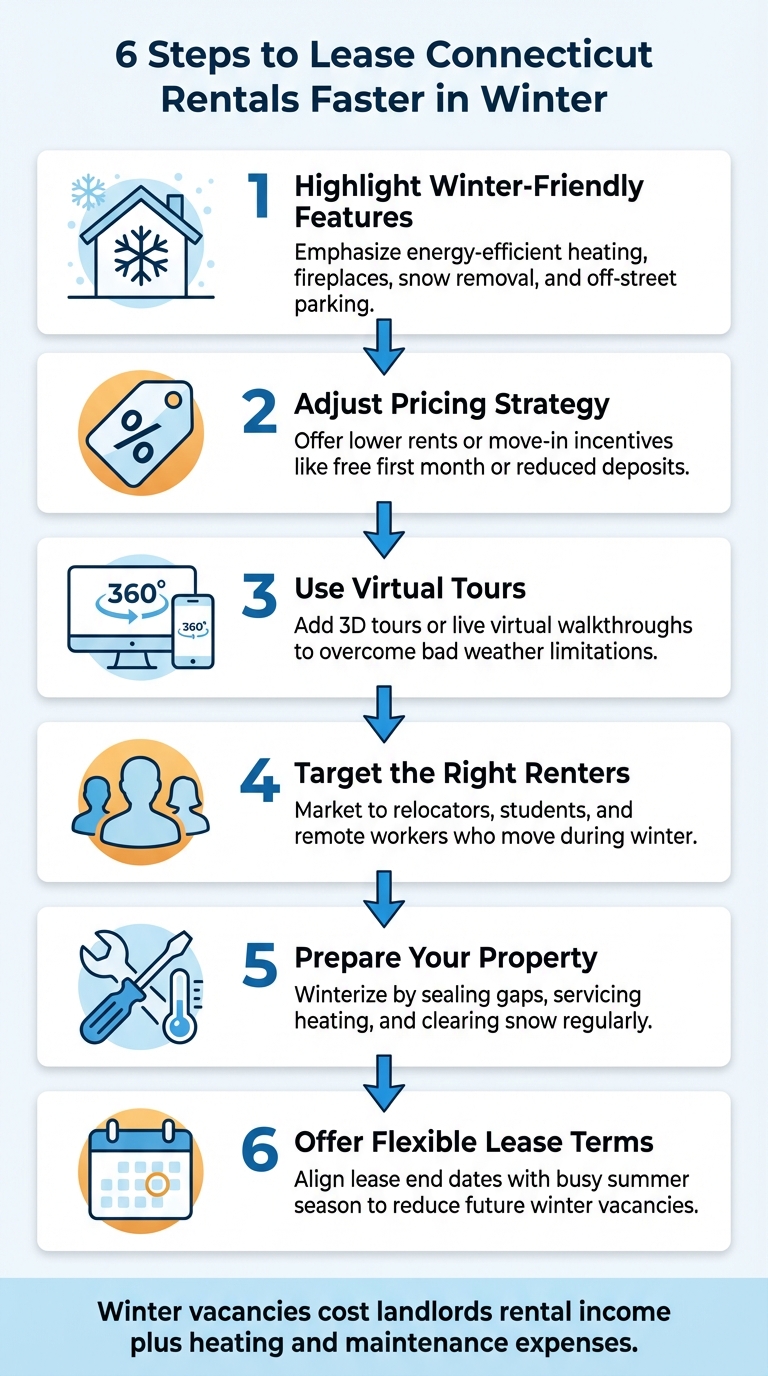
- Highlight Winter-Friendly Features: Emphasize amenities like energy-efficient heating, fireplaces, snow removal, and off-street parking in your listings.
- Adjust Pricing: Offer slightly lower rents or move-in incentives like a free month’s rent or reduced deposits to attract tenants.
- Use Virtual Tours: Bad weather can limit in-person showings. Add 3D tours or live virtual walkthroughs to make your property accessible.
- Target the Right Renters: Market to relocators, students, and remote workers who often move during winter.
- Prepare Your Property: Winterize by sealing gaps, servicing heating systems, and clearing snow to make the unit more appealing and safe.
- Offer Flexible Lease Terms: Align lease end dates with the busy summer rental season to reduce future winter vacancies.
6 Steps to Lease Connecticut Rentals Faster in Winter
5 Tips for finding great tenants FAST in the Winter
Adjust Your Marketing for Winter
When winter rolls around, your rental listings should emphasize warmth, comfort, and convenience. A generic property description won’t cut it during the colder months. Instead, focus on addressing the specific challenges of moving and living in winter.
Add Winter-Focused Keywords and Photos
Incorporate terms like "heated garage", "energy-efficient heating", "cozy fireplace", "smart thermostat", and "snow removal included" into your listings. These phrases immediately address the concerns renters have during winter.
Location matters even more in winter, so highlight proximity to transit. Phrases like "Walk to Metro-North" or "Easy I-95 access" can appeal to those dreading long, snowy commutes. Robert C. White & Company suggests:
In order for your off-peak listing to stand out during the winter, why not try and highlight some of the key (and cozy) features of the property? If the home is close to transit for easy commutes during the winter, let people know that…nobody wants to walk miles to the bus stop in the snow
Be transparent about the heating system – whether it’s gas, oil, or electric – so potential renters can estimate utility costs and feel more confident about the property.
For photos, choose bright, well-lit images, even if they were taken in summer. This helps prospective renters imagine the property’s appeal year-round, including outdoor spaces that may currently be hidden under snow. Avoid dim or grainy pictures. Highlight features like fireplaces, thermostats, and clear driveways to show off the property’s winter readiness.
A great example comes from a May 2025 Hemlane listing for a 3BR duplex in New Haven, CT, priced at $2,100 per month. The listing included key Connecticut-specific details like "Driveway Parking", "Updated Kitchen with Granite Counters", "In-unit washer/dryer", and "Pet-friendly." It also emphasized that the owner handled lawn care and snow removal – perfect for renters concerned about winter upkeep.
Since in-person showings can be tricky in winter, it’s smart to add virtual options to your strategy.
Offer Virtual Tours and Flexible Showing Times
Winter weather can make in-person viewings challenging, so adding virtual tours and offering flexible schedules can help you reach more potential renters. Use tools like 360-degree walkthroughs, Matterport 3D tours, or even simple video tours to let people explore the property without leaving their homes.
Real-time walkthroughs via FaceTime or Zoom offer another way to connect with prospective tenants, making it easier to overcome scheduling conflicts or bad weather. Dominique Swanson from ApartmentAdvisor notes:
Virtual tours and online lease signing allows tenants to view and sign for the property from the comfort of their own home and increase the likelihood of securing a new tenant quickly and reducing vacancy rates.
Consider using smart locks or digital lockboxes to enable self-guided tours, giving renters the flexibility to view the property on their own time. Extend your showing hours to include evenings and weekends to work around shorter daylight hours.
Hosting clustered open houses – one on a weeknight and another on a weekend – can help you maximize foot traffic while minimizing the need for numerous individual appointments. Just make sure walkways and driveways are professionally cleared before any visitors arrive.
Adapting your marketing to the winter season is a smart way to keep vacancies low and maintain steady rental income.
Set Competitive Winter Prices
After tailoring your winter marketing efforts, adjusting your pricing strategy becomes crucial to attract tenants during the slower season. In Connecticut, the rental market typically cools off from Thanksgiving through early April, meaning landlords face fewer prospective renters. While the prime rental season spans May through October, winter rentals often deal with tougher competition and a limited pool of tenants.
Adjust Rent Based on Season
Start by researching recently leased properties in your area. Pay close attention to units that successfully secured tenants rather than those lingering on the market – long market durations often indicate overpriced listings.
To stay competitive, consider setting your rent slightly lower than peak-season rates. Winter vacancies not only mean lost rental income but also come with added expenses like heating and maintenance. As U Holmes from Unbundled Property Management explains:
In Connecticut… the holiday season and winter months typically experience a slowdown in the rental market. Adjust your pricing strategy accordingly.
Local factors, like heating costs, should also influence your pricing. Whether the property uses oil, gas, or electric heating can significantly impact tenant appeal in colder months. High-demand amenities can justify a higher rent. For instance, a standard two-bedroom apartment in Bridgeport might rent for about $1,800, but features like off-street parking or in-unit laundry could push that figure closer to $2,000.
If lowering rent isn’t ideal, consider offering creative move-in incentives to attract tenants.
Provide Move-In Incentives
Temporary perks can make winter move-ins more appealing. Consider options like a free first month of rent, a reduced security deposit, or even a cashback bonus upon lease signing. Amanda Maher from All Property Management highlights the importance of such strategies:
Getting someone in the door with a temporary discount is better than not having anyone at all.
You might also offer flexible lease terms, such as shorter or longer durations, to align future vacancies with the busier rental season. Other incentives could include a $250 gift card to a local grocery store, complimentary high-speed internet or cable for a few months, or even allowing tenants to choose an upgraded appliance.
When offering incentives, structure them thoughtfully. For example, providing a free month as the last month of the lease – rather than the first – can help guard against early move-outs. Be sure to document all concessions clearly, as lenders may examine these details when assessing your property’s rental income during refinancing.
Make Your Property More Appealing in Winter
To strengthen your winter leasing strategy, focus on making your property more attractive with thoughtful upgrades. In Connecticut’s chilly months, tenants are drawn to homes that promise energy efficiency and lower heating costs.
Improve Heating and Insulation
Start with your heating system. Schedule annual furnace maintenance before the cold sets in – ideally by November. As CT Homes LLC points out:
By getting the furnace updated every winter you can easily add years to its life. You can either spend a few hundred dollars in November or be stuck with costly mid-winter breakdowns.
Replace furnace filters every one to three months, check attic insulation for gaps, and protect pipes in unheated spaces like basements or garages with foam sleeves to avoid freezing issues.
Seal any gaps around windows, doors, pipes, or wires using caulk or spray foam to cut down on heat loss. For windows, applying insulation film can reflect heat back into rooms, which is important since around 30% of a home’s heat escapes through windows. Pair this with heavy drapes or cellular shades at night to reduce heat loss by up to 10%.
Smart thermostats are another great addition – they allow tenants to control heating remotely, adding convenience and helping them manage costs. For older water heaters, an insulation jacket (costing about $20) can cut standby heat loss by 25% to 45%.
These upgrades not only make your property more comfortable but also show potential tenants that you’ve taken steps to prepare for winter.
Include Winter Services and Features
Providing winter-specific services can make your property even more appealing. Offer snow removal services or supply tenants with essentials like salt, shovels, or a snow blower. Make sure to discuss snow removal responsibilities with tenants before the season begins to avoid misunderstandings.
Highlight amenities that make life easier during winter in your listings. For example, in-unit laundry saves tenants from braving the cold to visit laundromats, and reserved off-street parking spares them the hassle of scraping ice off their cars each morning. If your property is near public transportation, be sure to emphasize that. As Robert C. White & Company explains:
If the home is close to transit for easy commutes during the winter, let people know that…nobody wants to walk miles to the bus stop in the snow!
Other appealing features include working fireplaces and energy-efficient appliances, which can make your property stand out during harsh winter months. Small touches like these can go a long way in attracting tenants and keeping them comfortable through the season.
sbb-itb-66a7c69
Use Professional Leasing Services
Leasing during Connecticut’s chilly winters can be a tough task. If you’re finding it hard to fill vacancies quickly or want to sidestep the usual 2–3 months of downtime that often comes with unmanaged properties, professional leasing services could be the solution you need. These services are designed to turn winter’s leasing challenges into smoother tenant placements.
Idoni Management‘s Lease Only Plan
One standout option to simplify winter leasing is Idoni Management‘s Lease Only plan. For a fee equal to one month’s rent, this plan delivers a comprehensive package: market analysis, professional marketing across 80+ top rental platforms, high-quality property photos, showings, and thorough tenant screening using Idoni’s ResiRank system. This system goes beyond traditional credit checks, reducing eviction risks by 30%. Additionally, the plan includes drafting legally sound lease agreements that align with Connecticut’s rental laws, ensuring your interests are well-protected.
Perhaps the most reassuring feature is their 12-month tenant guarantee. If a lease ends prematurely, Idoni Management will either refund the leasing fee or apply it to securing your next tenant. As they explain:
Our 12-month tenant guarantee ensures consistent rent payments, and we refund our leasing fee for the next tenant if needed.
With more than a decade of experience in Connecticut’s rental market and advanced AI tools to identify reliable tenants quickly, Idoni Management helps you avoid the financial drain of extended vacancies during the winter months. Professional property managers like Idoni bring the expertise and resources necessary to streamline your leasing process and maximize your rental income.
Target Tenants Who Move in Winter
Finding tenants during the colder months requires a focused approach. Winter renters often move because they have to, not because they want to. By understanding who these renters are and what drives their decisions, you can tailor your marketing efforts to meet their specific needs. This approach ensures you attract motivated tenants who are ready to commit.
Market to Relocators, Students, and Remote Workers
Some renters, like corporate relocators, don’t have the luxury of waiting until spring. Professionals moving to cities like Hartford, Stamford, or Bridgeport for new jobs are often on tight schedules dictated by their start dates. These individuals are prime candidates for winter leases. To appeal to them, use keywords like "Walk to Metro-North", "Easy I-95 access", and "NYC commuter-friendly." Many of these renters rely on virtual tours, with 72% of renters willing to sign a lease without an in-person visit if a 3D tour is available.
University students and faculty are another key group to target, especially those affiliated with Yale, UConn, and Quinnipiac. Highlight features like high-speed Wi-Fi, quiet study areas, and proximity to campuses or medical centers. Posting your listings on university housing boards can also increase visibility.
Remote workers represent a growing demographic. They often need additional space for a home office, so rebranding a 3-bedroom unit as a "2-bedroom plus office" can make your property more appealing. Pet-friendly policies are another big draw for this group. To stand out, consider offering incentives like a $250 grocery gift card or free high-speed internet for three months.
By understanding these specific tenant groups, you can craft a marketing plan that resonates with their priorities.
Use Market Data to Refine Your Approach
Once you’ve identified your target tenants, use local market data to fine-tune your strategy. In Connecticut, winter rental trends show that smaller units, like 1- and 2-bedroom apartments, tend to lease faster than larger ones. Rebranding a 3-bedroom unit with flexible space options can help attract more renters. Tools like Zillow and Rentometer can help you track competitor pricing and set rents that appeal to winter tenants without undercutting your property’s value.
Different regions in Connecticut attract different types of renters. For example, Stamford and Norwalk are ideal for NYC commuters, while New Haven is home to Yale affiliates and hospital staff. In shoreline towns, furnished short-term rentals are particularly appealing. Since most renters begin their housing search 60 to 90 days before moving, staying visible on high-traffic platforms like Realtor.com – which sees 72 million visits a month – can keep your property in front of potential tenants.
As Isabella Housel from Market Apartments explains:
Winter often filters out casual browsers, leaving you with genuinely interested tenants. These folks are usually committed and less flaky, making the leasing process smoother.
Prepare Properties and Schedule Showings Efficiently
Getting your property ready for winter showings requires some extra effort, but it’s worth it to attract tenants and avoid costly issues. Start by servicing the furnace before the cold hits – this helps prevent expensive breakdowns during the season. Winterizing your property, like sealing gaps and insulating areas, can also cut energy bills by about 11%, which is a big deal for Connecticut tenants, where heating costs are a common concern.
Before every showing, make sure all walkways, driveways, and porches are clear of snow and ice. Not only does this improve safety, but it also makes the home more appealing. Use salt to keep these areas safe and remove any large icicles that could become a hazard. When listing your property, avoid using photos of snow-covered driveways – opt for summer photos instead, so tenants can imagine the property year-round. For vacant units, keep the temperature at least 55°F to prevent pipes from freezing. These winter preparations are essential for keeping your property attractive and functional, even during the colder months.
Get Properties Ready for Winter Showings
A pre-winter inspection is a must. Address heating system maintenance, insulation, and gutter cleaning, and take steps like insulating exposed pipes, attics, and water heaters. Adjust ceiling fans to rotate clockwise to push warm air down, and trim any bushes to reduce the risk of damage from heavy snow.
When marketing your property, highlight features that Connecticut renters prioritize in winter. Be specific about heating types – whether it’s oil, gas, or electric – and include details about parking, like driveway or off-street options, as these are top concerns for local tenants. Make the space feel inviting by emphasizing cozy elements such as fireplaces or energy-efficient heating systems. As Robert C. White & Company explains:
An empty unit in the winter is even worse than normal… because not only will the landlord miss out on rental income, they’ll also have to pay to heat the home and keep pipes from freezing
.
Once your property is ready for the season, turn your attention to streamlining the showing process.
Schedule Showings Quickly and Flexibly
With your property winterized, efficient scheduling becomes the next priority. Respond to inquiries within 24 hours – acting quickly can make the difference between securing a tenant and losing them to another listing. Offer both virtual and in-person tours to cater to different preferences. To save time, pre-screen potential tenants by asking about move-in dates, income, and specific needs to filter out unqualified leads.
Hosting open houses on both a weekend and a weeknight can be a smart move. This approach allows multiple prospects to view the property at once, creating a sense of competition while also reducing the time spent on individual showings during unpredictable winter weather. If possible, start marketing and showing the property while your current tenant is still in the process of moving out. This strategy can help you avoid gaps in occupancy.
Conclusion
In Connecticut, winter leasing doesn’t have to mean empty units or lost income. By showcasing your property’s best features – like using summer photos and virtual tours – you can highlight its appeal all year long. Add to that a focus on winter-specific perks, such as efficient heating systems, off-street parking, and included snow removal services, and you’ve got a recipe for attracting tenants even in the colder months.
Competitive pricing paired with move-in incentives, like a reduced security deposit or a free month’s rent, can create the urgency needed to fill vacancies during the slower season. Offering flexible lease terms, such as a 6- or 18-month lease signed in December, can strategically align your next vacancy with the high-demand summer season. After all, prolonged vacancies can result in significant financial losses.
Upgrading your property’s heating and insulation is another smart move. Not only does this enhance tenant comfort, but it also helps prevent costly heating emergencies. Don’t forget to service your HVAC system before winter sets in – it’s a small step that can save you big headaches down the line.
If managing winter leasing feels overwhelming, professional leasing services can simplify the process. For instance, Idoni Management’s Lease Only Plan provides market analysis, professional photos, tenant screening, and lease drafting – all for the cost of one month’s rent. This kind of support can minimize the risks of extended vacancies during the winter.
Start marketing your property at least 60 days before it becomes vacant, focusing on groups like relocators, students, and remote workers. By implementing these strategies, you can turn winter’s challenges into opportunities for consistent rental income.
FAQs
How do virtual tours help Connecticut landlords lease properties faster during winter?
Virtual tours make it easy for potential renters to explore properties without leaving their homes. This convenience becomes even more valuable during winter when snow, ice, and shorter daylight hours can make in-person visits a hassle. By offering live or pre-recorded walkthroughs, landlords can ensure their listings remain accessible and appealing, no matter the weather.
These tours also give landlords a chance to showcase features renters care about during colder months, like efficient heating systems or well-insulated windows – helping prospects picture a warm and inviting space. Plus, renters can take their time exploring, revisit key details, and make decisions faster. This not only shortens vacancy periods but also keeps rental income consistent. Virtual tours are a practical way to attract tenants and secure leases, even during the slower winter months.
What are the best ways to market rental properties during the winter months?
To successfully market rental properties during winter, focus on making the space feel cozy, welcoming, and stress-free. Highlight features that make winter living more comfortable, such as energy-efficient windows, a dependable heating system, or a charming fireplace. If your property offers perks like snow removal services or easy access to public transit, be sure to showcase those as well – they can be big selling points during the colder months.
Consider creating seasonal incentives to attract renters. Offers like reduced security deposits, a discounted first month’s rent, or free utilities for the first month can create a sense of urgency, motivating potential tenants to make a decision quickly. Make these promotions stand out in your online listings and social media ads to grab attention.
Simplify the process for prospective renters. Virtual tours and video walkthroughs are especially helpful in winter, allowing people to view the property without braving the cold. Be thorough in your listings by including details about utilities, parking, and pet policies. Tailor your marketing to groups more likely to move during this season, such as professionals starting new jobs or families relocating after the holidays, and ensure your messaging speaks to their specific needs.
Why is offering flexible lease terms a smart strategy for winter rentals?
Offering adjustable lease terms during the winter can be a smart strategy for landlords looking to attract renters in a typically slower rental market. Winter often brings unique challenges for potential tenants – think holiday expenses, job changes, or academic schedules – which can make the standard 12-month lease feel less appealing. By offering options like shorter-term leases or month-to-month agreements, landlords can make it easier for renters to commit, reducing the risk of extended vacancies.
This approach also benefits landlords by encouraging current tenants to stick around longer. Tenants are less likely to break their lease to avoid the hassle and expense of moving during winter if they know they have the flexibility to adjust their lease length or renewal terms. This not only helps ensure a steady flow of rental income but also cuts down on turnover costs, keeping cash flow stable during the colder months.