

Connecticut Rental Turnover Costs: Where Landlords Lose Money Between Tenants
Connecticut rental turnover costs are the expenses and lost rent that build up between one tenant moving out and the next qualified tenant moving in. Most landlords notice the obvious bills: cleaning, paint, repairs, lock changes, and utilities. The larger loss is often less visible. Every extra vacancy day, delayed inspection, slow vendor response, weak listing, missed lead, or incomplete move-out record can turn a normal turnover into a profit leak.
For Connecticut rental owners, turnover is not just a maintenance event. It is an operating process. The owners who protect cash flow usually have a clear move-out checklist, fast condition documentation, vendor coordination, pricing review, listing schedule, applicant follow-up system, and deposit documentation. The owners who lose money usually wait until the tenant is already gone to figure out what needs to happen next.
Key Takeaways
- Turnover costs include both direct expenses and lost rent from vacancy days.
- The biggest leak is often time, not materials. A $1,900 rental loses about $63 per day while vacant.
- Move-out documentation protects owners when cleaning, damage, or deposit deductions become disputed.
- Connecticut security deposit handling has deadlines and interest rules, so turnover records need to be organized.
- Pricing, photos, showing access, and response speed should be ready before the unit is vacant whenever possible.
- A repeatable turnover system helps landlords reduce vacancy, avoid rushed decisions, and place better tenants.
What Counts as a Rental Turnover Cost?
A rental turnover cost is any cost created by the transition from one tenancy to the next. Some costs are unavoidable. A unit should be cleaned. Locks may need to be changed. Normal wear and tear may need attention. The problem starts when normal turnover work is handled without a timeline, scope, budget, or leasing plan.
Turnover costs usually fall into two categories: direct costs and indirect costs.
Direct Turnover Costs
- Cleaning
- Trash removal
- Paint and touch-up work
- Flooring repairs or replacement
- Appliance repairs
- Plumbing, electrical, or HVAC work
- Lock changes or rekeying
- Lawn care or snow cleanup between tenants
- Utility costs while vacant
- Photography, listing, and marketing costs
Indirect Turnover Costs
- Lost rent during vacancy
- Delayed leasing because the unit is not photo-ready
- Lower rent because the owner accepts the first weak applicant after a long vacancy
- Extra owner time spent chasing vendors, leads, and paperwork
- Deposit disputes caused by poor condition documentation
- Future repair costs from rushed or incomplete work
The direct costs feel more painful because they arrive as invoices. The indirect costs are often larger because they quietly reduce net operating income.
The Vacancy Day Math Landlords Often Miss
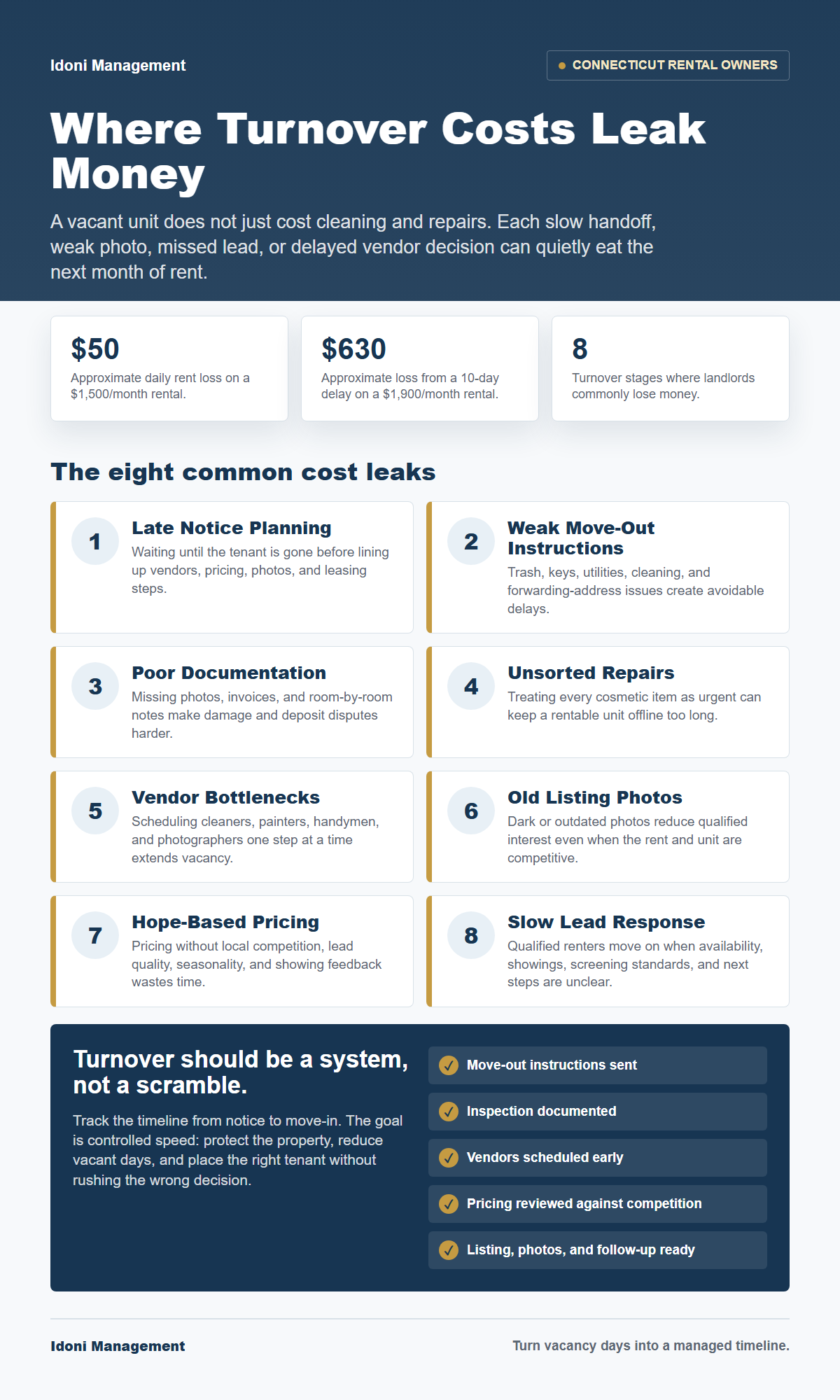
Vacancy is the silent turnover expense. If a rental is priced at $1,900 per month, each vacant day costs about $63 in lost rent. Ten extra vacancy days cost about $630 before cleaning, repairs, utilities, or marketing are counted.
| Monthly Rent | Lost Rent Per Day | 10-Day Delay | 21-Day Delay |
|---|---|---|---|
| $1,500 | About $50 | About $500 | About $1,050 |
| $1,900 | About $63 | About $630 | About $1,330 |
| $2,400 | About $80 | About $800 | About $1,680 |
This is why turnover speed matters. A $450 cleaning bill may feel expensive, but a slow decision that leaves the unit vacant for two extra weeks can cost more than the cleaning itself.
That does not mean landlords should rush and place the wrong tenant. Bad tenant placement can cost far more than a few vacancy days. The goal is controlled speed: get the unit ready, listed, shown, screened, and leased without avoidable delays.
Where Connecticut Landlords Lose Money During Turnover
Turnover losses usually come from process gaps. One missed step may not look serious. Several missed steps in a row can erase a month of rent.
1. Waiting Too Long to Plan the Turnover
The turnover process should start before the tenant leaves. Once notice is received, the owner or manager should confirm the move-out date, send move-out instructions, schedule a pre-move-out check if appropriate, line up vendors, review rent pricing, and prepare the listing plan.
Landlords lose money when they wait until the unit is empty to ask basic questions:
- What condition is the unit in?
- Which vendors are available?
- What rent should be listed?
- Are new photos needed?
- What screening standards will apply?
- Who is responding to leads?
Those questions should not be answered after the clock has already started.
2. Poor Move-Out Instructions
Clear move-out instructions can reduce cleaning problems, abandoned items, key issues, and forwarding-address confusion. Tenants should know how to return keys, remove personal property, clean the unit, handle trash, disconnect utilities when appropriate, and provide a forwarding address for deposit communication.
Connecticut owners also need organized security deposit records. The Connecticut Department of Banking explains that tenants should provide written notice of a forwarding address for the security deposit, and Connecticut law sets specific timing requirements for returning deposits or itemized deductions. Owners should confirm the current rule with counsel or official state guidance before making deposit decisions.
Bad move-out instructions create avoidable friction. Good instructions create cleaner units and better records.
3. Weak Condition Documentation
Turnover documentation should be boring, detailed, and consistent. Photos and videos should show the condition of each room, appliances, fixtures, floors, walls, windows, bathrooms, exterior areas, and any tenant-caused damage.
Landlords should document:
- Date and time of inspection
- Who completed the inspection
- Room-by-room condition
- Cleaning issues
- Damage beyond normal wear
- Missing keys, remotes, fixtures, or appliances
- Vendor estimates and invoices
- Before-and-after repair photos
Documentation is not just for disputes. It also helps the owner understand whether a property is improving, declining, or creating repeat repair patterns every time it turns over.
4. Treating Every Repair as Urgent
Some turnover repairs must happen before a new tenant moves in. Others can be scheduled after move-in if they do not affect safety, habitability, function, or the rental promise. Owners lose money when every minor cosmetic issue becomes a reason to delay listing.
A better system separates work into three groups:
- Must fix before listing: safety issues, major functionality problems, obvious defects that hurt photos or showings.
- Must fix before move-in: items that affect habitability, lease promises, appliances, locks, plumbing, heat, hot water, or required services.
- Can schedule later: minor cosmetic improvements that do not affect occupancy, safety, or tenant expectations.
This prevents both extremes: listing a sloppy unit or delaying rent for work that could have been scheduled more intelligently.
5. Slow Vendor Coordination
Vendors are a major turnover bottleneck. If the painter, cleaner, handyman, plumber, and photographer are scheduled one at a time after each prior step finishes, the vacancy can stretch quickly.
A better turnover sequence looks like this:
- Confirm tenant notice and expected move-out date.
- Pre-alert cleaners and repair vendors.
- Inspect immediately after possession is returned.
- Approve necessary work fast.
- Schedule overlapping tasks where possible.
- Take updated photos as soon as the unit is clean and presentable.
- Launch or refresh the listing quickly.
Owners do not need chaos. They need a calendar, vendor accountability, and fast approval rules.
6. Reusing Bad Listing Photos
Old photos can cost real money. If the photos are dark, dated, cluttered, or inconsistent with the current condition, good applicants may skip the listing. Weak photos can also attract more low-intent leads because prospects cannot tell whether the unit is worth applying for.
Strong turnover photos should show:
- Clean rooms with natural light where possible
- Kitchen, bathroom, bedrooms, living areas, storage, and exterior
- Appliances and key amenities
- Parking, laundry, yard, porch, or entry details if relevant
- Accurate condition, not misleading angles
Photos should reduce uncertainty. If prospects have to guess, they may not apply.
7. Pricing From Hope Instead of Evidence
Turnover is the right time to review rent. That does not mean automatically raising the rent. It means comparing the rental against real local alternatives by price, condition, location, bedroom count, parking, laundry, pet policy, amenities, and leasing season.
A landlord who prices from hope may lose three weeks chasing a rent number the market is not supporting. A landlord who underprices from fear may leave money on the table for an entire lease term.
Better pricing uses multiple signals:
- Comparable active listings
- Recent lead volume
- Showing requests
- Applicant quality
- Days on market
- Seasonality
- Condition compared with competing rentals
Pricing is not a one-time guess. It is a feedback loop.
8. Slow Lead Response
A good rental can still lose applicants if nobody responds quickly. During turnover, speed matters because qualified renters are often looking at several properties at once. If one landlord replies tomorrow and another replies in ten minutes with clear next steps, the faster operator has an advantage.
Lead response should answer the questions prospects are already asking:
- Is the unit still available?
- When can I see it?
- What are the requirements?
- Are pets allowed?
- What is included?
- How do I apply?
Slow follow-up turns listing traffic into dead air.
A Practical Turnover Cost Audit
Landlords can use a simple audit after every turnover. The goal is to identify what actually cost money, what caused delay, and what should improve before the next vacancy.
| Turnover Area | Question to Ask | What It Reveals |
|---|---|---|
| Notice timing | When did planning begin? | Whether the owner waited too long to prepare. |
| Inspection | Was the unit documented immediately? | Whether deposit and repair records are defensible. |
| Repairs | Which repairs delayed listing? | Whether work was prioritized correctly. |
| Vendors | How many days were lost waiting? | Whether vendor scheduling needs improvement. |
| Listing | Were photos, copy, and pricing ready? | Whether marketing caused avoidable delay. |
| Leads | How fast were prospects contacted? | Whether qualified renters were lost to slow response. |
| Screening | Were standards clear before applications? | Whether unqualified traffic wasted time. |
| Move-in | Was the lease, payment, and key handoff clean? | Whether the next tenancy started with good records. |
If the same problem appears in more than one turnover, it is not a one-off. It is a system issue.
Connecticut Turnover Issues Owners Should Watch
Connecticut rental turnover can be especially sensitive because many properties are older, weather can affect maintenance schedules, and local rental conditions vary sharply between markets. A three-family in Bridgeport does not turn the same way as a single-family rental near Hartford or a unit near New Haven, Waterbury, Stamford, or a commuter corridor.
Owners should watch for these Connecticut-specific issues:
- Older building systems: plumbing, electrical, heating, windows, and flooring may need more proactive review between tenants.
- Seasonal delays: winter weather can slow exterior work, cleanup, vendor access, and showing traffic.
- Local code and inspection requirements: some municipalities may have rental registration, inspection, or certificate rules that affect timing.
- Security deposit compliance: deposit deductions need clean documentation, itemization, and timing discipline.
- Tight rental supply: low vacancy can help demand, but it does not fix bad pricing, bad photos, or poor lead handling.
The Connecticut Office of the State Comptroller cited U.S. Census Bureau data showing Connecticut’s rental vacancy rate at 2.2% in the last quarter of 2024. Low vacancy can support demand, but owners should not mistake market pressure for a substitute for good operations. A poorly run turnover can still bleed money in a tight market.
Common Mistakes Connecticut Landlords Make During Turnover
- They start too late. The turnover plan begins after move-out instead of after notice.
- They skip move-out instructions. The tenant leaves behind trash, keys, utility confusion, or no forwarding address.
- They under-document damage. The owner has invoices but weak proof of condition.
- They delay the listing for minor work. Every small cosmetic item becomes a vacancy extension.
- They reuse old photos. The listing fails to compete even if the unit is rentable.
- They guess at rent. Pricing is based on what the owner wants, not what comparable listings and lead quality support.
- They respond slowly. Qualified renters move on before the owner follows up.
- They do not review the turnover afterward. The same delays repeat every time a tenant leaves.
What To Do Next
Before the next tenant moves out, create a turnover plan that covers notice, inspection, cleaning, repairs, vendor scheduling, photography, pricing, listing launch, lead response, screening, lease signing, and move-in documentation.
At minimum, owners should have:
- A move-out instruction template
- A room-by-room inspection checklist
- A vendor contact list with backup options
- A repair approval threshold
- A pricing review process
- A listing photo standard
- A lead response system
- A post-turnover cost review
The goal is not to spend nothing. That is unrealistic. The goal is to spend deliberately, reduce vacancy days, protect the property, and start the next tenancy with cleaner records.
FAQs About Connecticut Rental Turnover Costs
How much should a landlord budget for rental turnover?
There is no single number because turnover depends on property condition, tenant behavior, age of the building, vendor costs, and vacancy length. A light turnover may involve cleaning, touch-up paint, and minor repairs. A heavy turnover may include flooring, appliances, plumbing, trash removal, and several weeks of lost rent. Landlords should track both invoices and vacancy days to understand the real cost.
What is the biggest hidden turnover cost?
The biggest hidden cost is usually lost rent from vacancy days. Owners often focus on the cleaning or repair bill because it is visible, but a unit sitting vacant for two or three extra weeks can cost more than several repair items combined.
Can Connecticut landlords deduct turnover costs from a security deposit?
Connecticut landlords should distinguish between tenant-caused damage and normal wear and tear. Deposit deductions should be documented, itemized, and handled within applicable Connecticut deadlines. Owners should check current Connecticut Department of Banking guidance and consult qualified legal counsel when unsure.
Should landlords list a unit before repairs are complete?
Sometimes, but only if the listing is accurate and the owner can meet the promised move-in condition. If the unit is messy, unsafe, or visually weak, early listing can hurt lead quality. If repairs are minor and the timeline is clear, pre-listing can reduce vacancy.
How can landlords reduce turnover time without accepting bad tenants?
Landlords can reduce turnover time by preparing before move-out, scheduling vendors early, documenting condition quickly, using accurate pricing, responding fast to leads, and applying clear screening standards. Fast leasing should not mean weak screening. It should mean fewer avoidable delays.
Soft CTA
If turnover keeps eating your rental income, Idoni can help identify where the money is leaking: vacancy days, repair sequencing, pricing, photos, lead response, screening friction, or move-in coordination. Idoni Management helps Connecticut landlords build cleaner turnover systems across Bridgeport, Hartford, Waterbury, New Haven, Stamford, and nearby markets.
Over 200 Connecticut landlords trust Idoni Management to handle their rental properties. See what they say or request a rental turnover review for your property.
Suggested Internal Links
- Connecticut Rental Leads But No Qualified Applicants: A Landlord Leasing Funnel Audit
- Connecticut Rental Maintenance Systems: How Landlords Stop Midnight Repair Chaos
- Why Connecticut Rental Owners Feel Like ATMs With Traditional Property Management
- Bridgeport vs. Waterbury: Where Connecticut Landlords Lose Money
- Contact Idoni Management
Schema Recommendations
- Article schema for the main post.
- FAQPage schema using the FAQ questions above.
- LocalBusiness schema for Idoni Management if not already handled globally.
- BreadcrumbList schema for blog navigation.
This article is for general educational purposes only and is not legal advice. Connecticut rental rules can vary by property type, municipality, lease terms, and specific facts. Owners should consult qualified legal, tax, insurance, and code professionals when making turnover, deposit, or compliance decisions.