Connecticut Rental Maintenance Systems: How Landlords Stop Midnight Repair Chaos
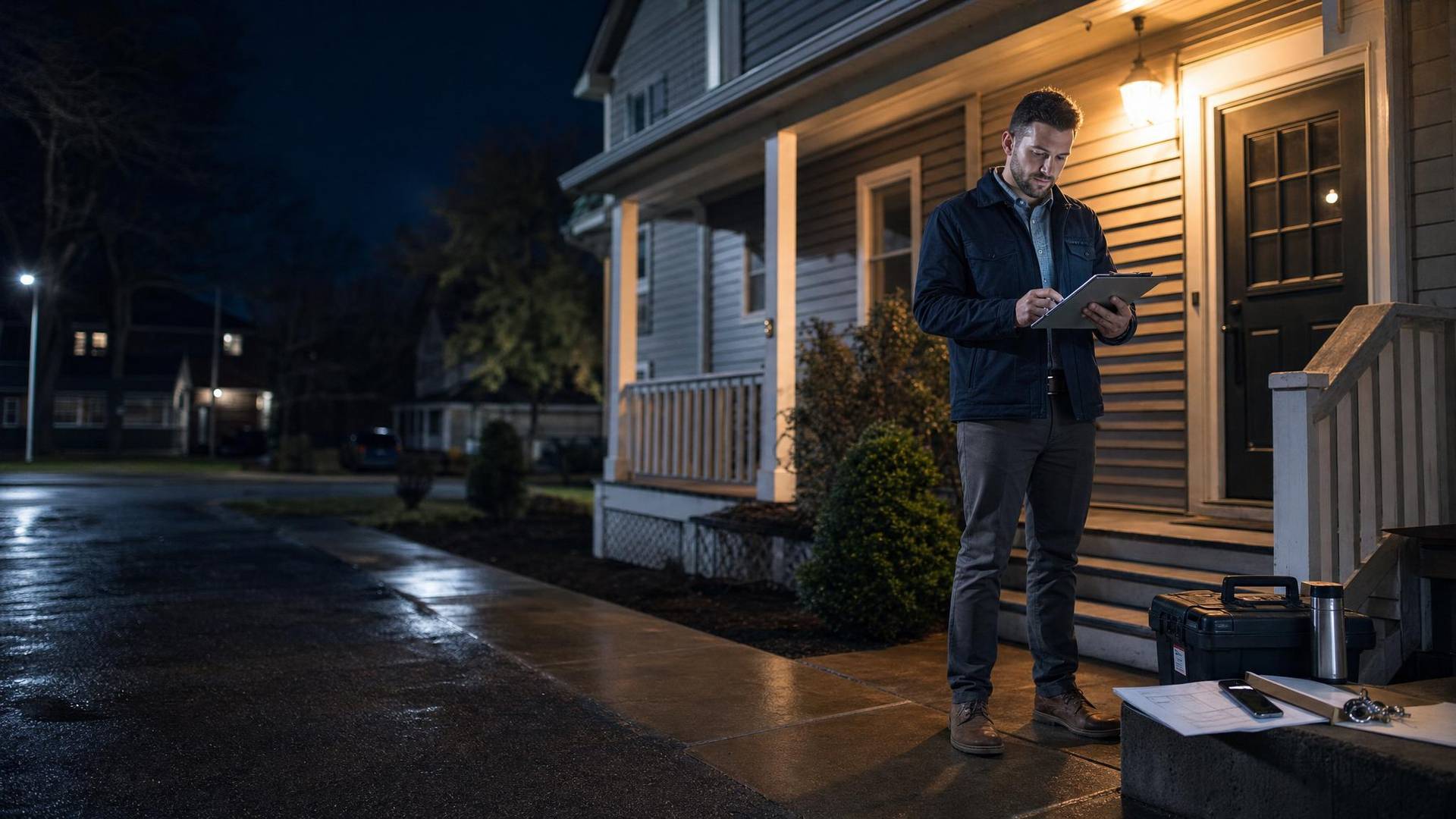
Midnight maintenance is not the real problem for Connecticut landlords. The real problem is owning rentals without a maintenance system. A tenant calling at 12:17 a.m. about water coming through a ceiling is stressful, but it is not unusual. What makes it expensive is confusion: no triage process, no vendor list, no approval rules, no documentation, and no one clearly responsible for the next step. Landlords in Bridgeport, Hartford, Waterbury, New Haven, and nearby Connecticut markets need a repeatable process for emergency calls, routine repairs, tenant communication, vendor dispatch, and owner reporting. If your rental operation depends on you personally remembering every text thread, every handyman preference, and every pending invoice, the system is already broken. Maintenance should be handled like operations, not panic.
Key Takeaways
- Midnight calls are manageable when emergency rules are defined before the phone rings.
- Every rental owner needs a written triage system for emergency, urgent, and routine repairs.
- Vendor dispatch should include scope, access instructions, photo requirements, and spending limits.
- Tenants lose trust when updates are vague, late, or scattered across texts.
- Maintenance records protect owners during disputes, lease enforcement, security deposit accounting, and future turns.
- A good property manager does not eliminate repairs. They eliminate chaos around repairs.
Why Midnight Maintenance Feels Worse Than It Is
Most landlords are not overwhelmed because a repair happened after hours. They are overwhelmed because the repair exposes every missing piece in the operation.
The late-night call usually creates five immediate questions:
| Question | Why It Matters |
|---|---|
| Is this a true emergency? | Not every after-hours complaint requires an emergency dispatch. |
| Who is responsible for answering? | Delays turn small problems into angry tenants and bigger damage. |
| Which vendor should go? | The wrong vendor wastes time and money. |
| What can be approved without owner review? | No approval rule means either overspending or dangerous delay. |
| How will the repair be documented? | Poor records create problems later with tenants, owners, insurance, and deposits. |
That is why maintenance belongs inside a system. It connects directly to the core services a property manager should provide, including tenant communication, vendor coordination, rent-ready turns, owner updates, and compliance-minded recordkeeping.
What Counts as a Maintenance Emergency in a Connecticut Rental
Landlords should separate maintenance requests into three categories. The categories do not need to be fancy. They need to be clear enough that the person answering the phone knows what to do.
Emergency
An emergency is a condition that may create immediate property damage, safety risk, habitability concern, or major service disruption.
Examples include:
- Active water leak
- No heat during cold weather
- Electrical hazard
- Fire, smoke, or carbon monoxide concern
- Exterior door or lock failure
- Sewage backup
- Major roof leak
Urgent
Urgent repairs need prompt attention but may not require a midnight vendor dispatch.
Examples include:
- Appliance failure
- Slow leak contained in a bucket
- Intermittent heat issue
- Broken interior door
- Pest complaint
- Minor plumbing backup that is not overflowing
Routine
Routine repairs can be scheduled during business hours.
Examples include:
- Loose cabinet hinge
- Dripping faucet
- Cosmetic damage
- Non-urgent appliance noise
- Minor screen or blind issue
The biggest mistake is treating every tenant message as either a crisis or an annoyance. Neither works. The better move is classification, response, dispatch, documentation.
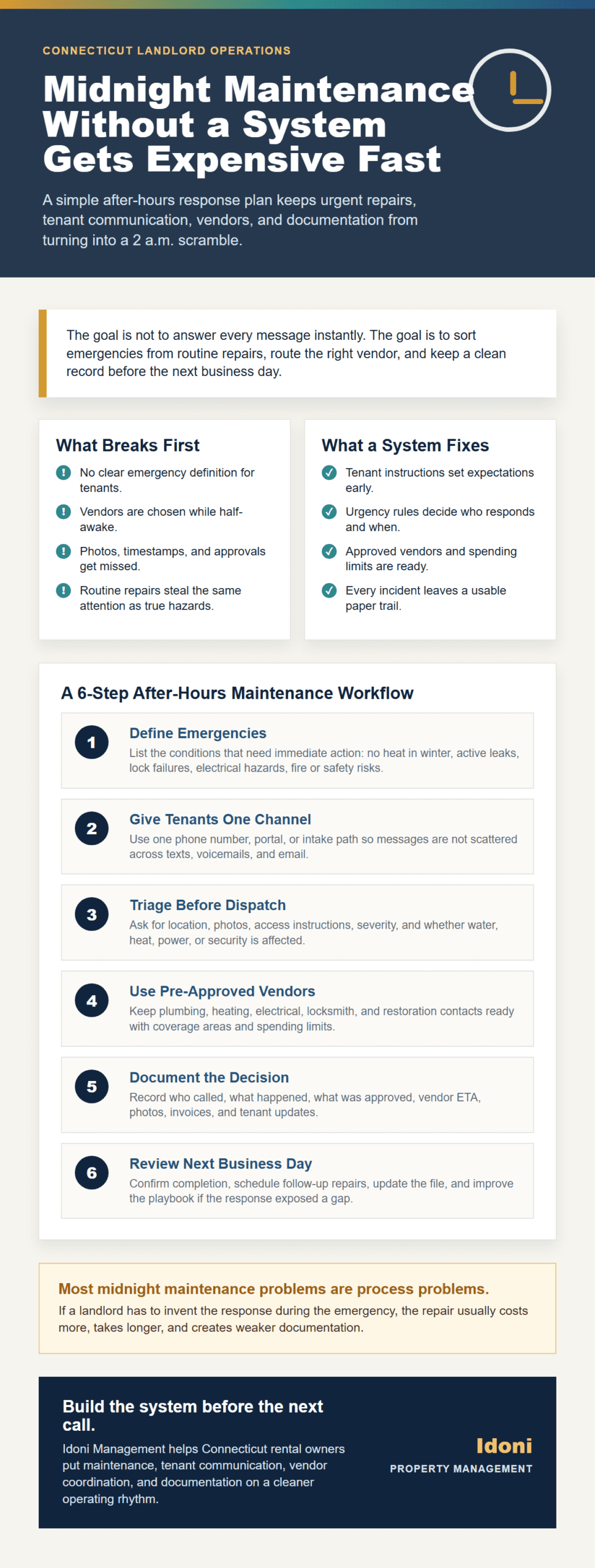
The 6-Part Maintenance System Every Landlord Needs
A rental maintenance system does not need to be complicated. It needs six parts that work every time.
| System Part | What It Should Answer |
|---|---|
| Intake | How do tenants submit repair requests, photos, and access notes? |
| Triage | Is the issue emergency, urgent, or routine? |
| Dispatch | Which vendor gets the job and what information do they need? |
| Approval | What can be approved automatically and what needs owner review? |
| Communication | Who updates the tenant, owner, and vendor? |
| Documentation | Where are photos, invoices, notes, and completion records stored? |
This is also where lease paperwork matters. A strong lease should tell tenants how to report maintenance, what counts as an emergency, and what happens if a tenant fails to provide access. That is why lease documentation is not just legal paperwork. It is part of operations.
How To Handle After-Hours Maintenance Without Losing Control
After-hours maintenance should follow a script, not a mood.
Use this process:
- Confirm the property, unit, tenant name, and callback number.
- Ask what is happening right now, not what happened earlier.
- Ask for photos or video if safe.
- Classify the issue as emergency, urgent, or routine.
- Give the tenant a clear next update time.
- Dispatch the vendor with written scope and access notes.
- Record the timeline, photos, vendor response, and outcome.
For example, if a tenant reports water on the floor, the first goal is not to debate blame. The first goal is to stop damage. Shutoff instructions, photos, vendor dispatch, and tenant updates come first. Responsibility, billing, insurance, and deposit questions come later with better facts.
Vendor Dispatch: The Difference Between a Repair and a Mess
A vendor should never receive a vague text like: "Can you check 1145 Ogden?"
That creates bad work orders and worse invoices. A proper dispatch should include:
- Property address and unit
- Tenant contact and access instructions
- Problem summary
- Emergency level
- Photos or video if available
- Spending limit
- Whether owner approval is required before additional work
- Required completion photos
- Invoice instructions
The owner should also know the rules before the repair happens. If every $175 decision needs a phone call, the process will jam. If every vendor has unlimited discretion, costs drift. The middle ground is a written approval policy.
Example:
| Repair Type | Suggested Approval Rule |
|---|---|
| Emergency stop-damage work | Dispatch immediately up to a set limit |
| Routine repair under threshold | Approve without owner delay |
| Larger repair or replacement | Get quote and owner approval |
| Tenant-caused damage | Document first, repair second, bill only with support |
This is where many self-managing landlords lose money. They either wait too long, approve too casually, or fail to collect the proof needed later.
Tenant Communication Is Part of Maintenance
Tenants judge maintenance by more than the final repair. They judge:
- How fast someone responds
- Whether the next step is clear
- Whether they have to repeat themselves
- Whether the vendor actually shows up
- Whether anyone confirms completion
A tenant can tolerate a delayed part. They have a much harder time tolerating silence.
Use short updates:
- "We received this and are reviewing it now."
- "This has been classified as urgent, not emergency, and we are scheduling the vendor."
- "The vendor is assigned and will contact you for access."
- "Please send a completion photo once the repair is done."
- "We are keeping this open until the issue is confirmed resolved."
Good communication also supports tenant screening and retention. Strong tenants are more likely to renew when maintenance is predictable and respectful.
Connecticut Rental Operations Trends in 2026
Connecticut rental demand remains tight in many owner-heavy markets, and low vacancy pressure means a poorly maintained unit can still rent, but that is not the same as running a healthy asset. Public vacancy datasets often lag, but recent market reports continue to show limited rental supply in parts of Connecticut, especially around job centers and commuter corridors.
Seasonally, winter exposes weak maintenance systems fastest: heat calls, frozen pipes, roof leaks, and access problems. Spring and summer bring turns, exterior repairs, pest complaints, and higher leasing activity. In markets like Bridgeport, Hartford, Waterbury, New Haven, and Norwalk, the owners who win are not the ones who never get calls. They are the ones who resolve issues cleanly and keep units rentable.
Common Mistakes Connecticut Landlords Make With Maintenance Systems
Mistake 1: Using text messages as the work order system
Texts are fine for quick communication. They are terrible as the system of record. Threads get buried, photos disappear, and nobody knows what is still open.
Mistake 2: Having no emergency definition
If tenants, owners, and vendors all define "emergency" differently, every after-hours call becomes a negotiation.
Mistake 3: Calling vendors without written scope
Verbal dispatch creates vague invoices and avoidable disputes. Written scope protects everyone.
Mistake 4: Not requiring completion photos
If there is no completion photo, you are relying on memory and trust. That is thin documentation for a real asset.
Mistake 5: Failing to connect maintenance records to lease enforcement
Maintenance history can matter later for habitability disputes, tenant chargebacks, security deposit deductions, and eviction documentation. If your records are sloppy, your position gets weaker. For related owner risk, review Connecticut security deposit handling and the eviction process.
Mistake 6: Assuming a good handyman equals a good system
A reliable vendor helps. But one vendor is not a maintenance operation. You still need intake, triage, dispatch, approvals, updates, and records.
What Connecticut Landlords Should Do Next
Start with the boring pieces. They are what prevent the expensive calls.
- Write a one-page emergency maintenance policy.
- Create separate workflows for emergency, urgent, and routine repairs.
- Build a vendor list by trade and service area.
- Set owner approval thresholds before repairs happen.
- Require photos before and after work whenever practical.
- Use one place to track open maintenance items.
- Review your lease language around repair reporting, access, tenant damage, and emergency entry.
- Audit the last 10 maintenance issues and ask: where did time, money, or communication break down?
If the answer is "Craig just remembers it," that is not a system. That is a bottleneck with a phone.
FAQs
What should landlords do when tenants call about maintenance at midnight?
First, classify the issue. If there is active damage, safety risk, no heat in cold weather, sewage backup, or a lock/security issue, treat it as an emergency and dispatch according to your policy. If it is not an emergency, acknowledge it and schedule the next business-hour step.
Do Connecticut landlords need a written maintenance policy?
A written policy is not just useful. It is the only sane way to keep tenants, vendors, and owners aligned. It should explain how tenants submit requests, what counts as an emergency, and how access will be coordinated.
How fast should a landlord respond to maintenance requests?
Emergency issues should be answered immediately or as close to immediately as possible. Urgent issues should get a clear same-day or next-business-day response. Routine issues should still be acknowledged quickly so tenants know the request is not lost.
Should landlords let vendors approve repairs without calling first?
Only within a defined spending limit. For example, owners may allow emergency stop-damage work up to a set amount while requiring approval for replacements or larger repairs. The key is deciding this before the call happens.
What maintenance records should landlords keep?
Keep the request, photos, tenant communication, vendor dispatch notes, invoices, completion photos, approval records, and final tenant confirmation. These records help with owner reporting, security deposit decisions, insurance questions, and legal disputes.
How Idoni Management Can Help
Idoni Management builds rental maintenance systems that keep repairs moving without turning every call into owner chaos. We handle tenant intake, emergency triage, vendor dispatch, owner updates, invoice review, and repair documentation for landlords across Bridgeport, Hartford, Waterbury, New Haven, Norwalk, and nearby Connecticut markets.
Over 200 Connecticut landlords trust Idoni Management to handle their rental properties. See what they say or get your free maintenance operations review today.