

Where Connecticut Property Owners Lose Money Without Realizing It
Connecticut property owners usually do not lose money because of one dramatic mistake. More often, profits get chipped away by small operational problems that repeat month after month: longer-than-needed vacancy, delayed maintenance, below-market rent, weak tenant screening, and poor visibility into property performance. These issues are easy to normalize because they do not always show up as one obvious line item. But over a year, they can take a meaningful bite out of cash flow. For landlords in Bridgeport, Hartford, New Haven, Waterbury, and surrounding markets, the fix is usually not “work harder.” It is building better systems around leasing, maintenance, pricing, reporting, and renewals.
Key Takeaways
- Vacancy is not just lost rent; it also increases carrying costs, turnover pressure, and leasing expenses.
- Delayed maintenance usually becomes more expensive maintenance.
- Weak screening can lead to nonpayment, property damage, turnover, and legal costs.
- Many landlords underperform simply because rent is below market without a clear strategy.
- Poor reporting hides profit leaks and slows decision-making.
- Small operational inefficiencies compound faster than most owners realize.
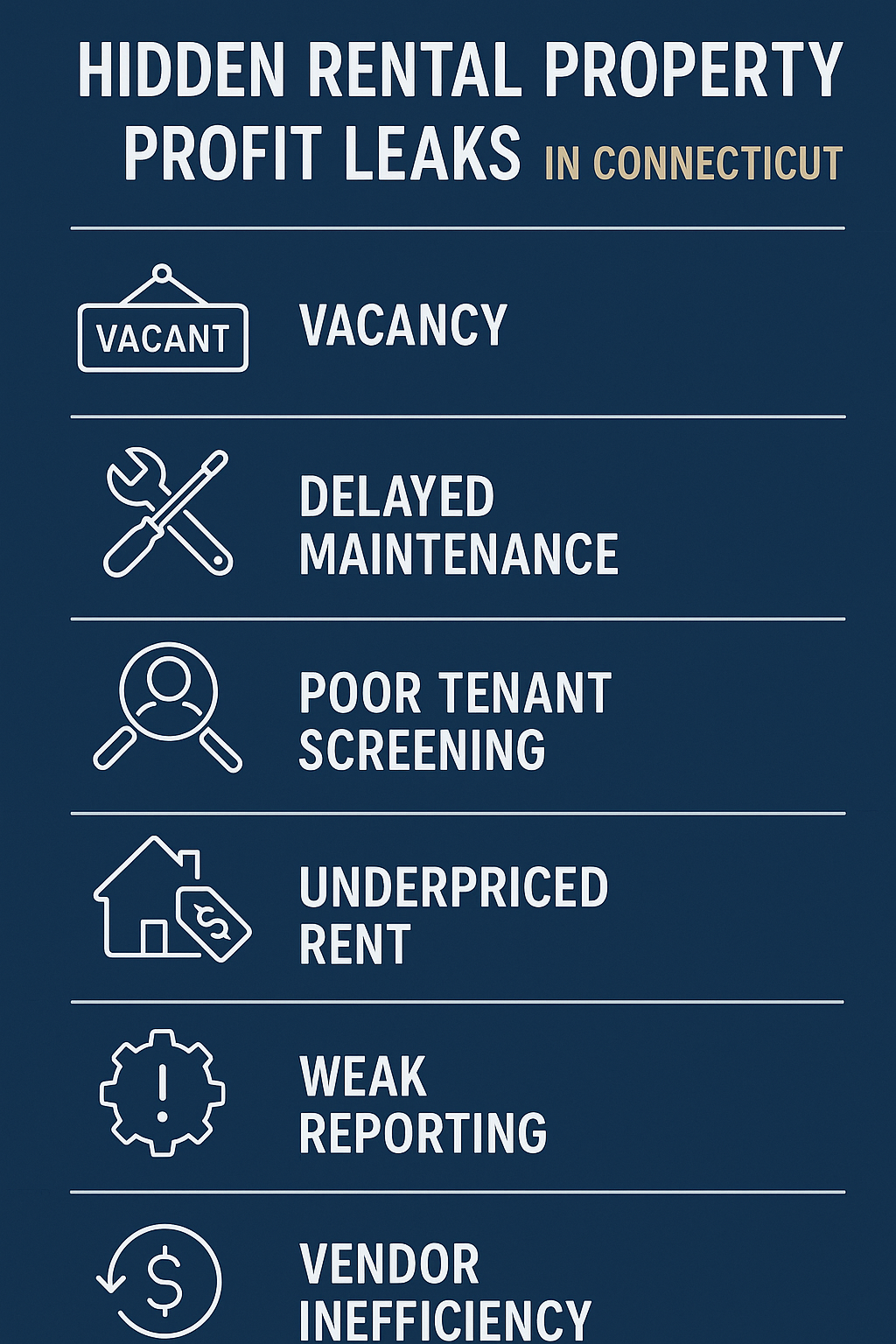
Vacancy Costs More Than Most Landlords Think
Every extra week a unit sits vacant costs more than the monthly rent divided by four.
Owners also keep paying:
- mortgage obligations
- property taxes
- insurance
- utilities, if applicable
- turnover and marketing costs
Vacancy tends to last longer when the property is priced incorrectly, turnover work is slow, listing photos are weak, or prospect follow-up is inconsistent. A unit that should have been rented in two weeks but takes six can erase a surprising amount of annual profit.
| Issue | Example Impact |
|---|---|
| Monthly rent | $2,000 |
| Extra vacancy time | 4 weeks |
| Lost rent | $2,000 |
| Utility / turnover drag | $200-$600 |
| Total impact | $2,200-$2,600+ |
For owners trying to improve leasing performance, this is where tighter systems matter. Good pricing, faster turnovers, and stronger marketing usually pay for themselves quickly.
Delayed Maintenance Turns Into Bigger Bills
Small maintenance issues rarely stay small.
A minor plumbing leak can become water damage. A neglected HVAC issue can become a system replacement. A loose handrail can become a liability concern. Many landlords think they are saving money by waiting, but delayed action often increases both repair cost and tenant frustration.
What starts as a manageable repair can turn into:
- a larger invoice
- a longer tenant complaint cycle
- more wear to the property
- preventable emergency calls
If you are already reviewing your lease process, it also helps to make sure repair responsibilities and documentation are handled clearly. Idoni’s post on Connecticut lease documentation is a good companion read.
Poor Tenant Screening Creates Expensive Downstream Problems
A bad placement can cost more than a short vacancy.
When screening is rushed, landlords may face:
- late or missed rent
- lease violations
- property damage
- complaints from neighbors
- higher turnover
- legal costs if the tenancy goes sideways
The goal is not just filling the unit fast. The goal is placing a tenant who is likely to pay on time, follow the lease, and stay.
A more consistent screening process should evaluate:
- income stability
- rental history
- background screening where permitted
- credit profile
- fit for the property and lease terms
For owners looking to tighten this part of operations, Idoni’s guide to tenant screening is worth reviewing.
Underpriced Rent Quietly Reduces Annual Returns
A lot of landlords focus on avoiding vacancy and ignore pricing strategy. That can be a mistake.
If rent is even modestly below market, the owner may lose thousands over the course of a year. This happens when landlords keep renewing at outdated rates, rely on old comps, price emotionally instead of strategically, or avoid increases without reviewing market conditions.
The answer is not always “raise rent aggressively.” Sometimes retention is the better move. But it should be a decision based on market data, condition, seasonality, and renewal timing, not guesswork.
Poor Visibility Makes Problems Harder To Fix
Many owners cannot clearly answer questions like:
- Is this property actually performing well?
- Are repairs trending up?
- Which unit causes the most issues?
- Are we below market on rent?
- Is turnover becoming more frequent?
That is a reporting problem.
Without clear visibility, landlords often keep making reactive decisions. Money leaks out through recurring small issues that nobody is tracking closely enough to correct.
Good reporting should help owners see:
- rent performance
- repair patterns
- delinquency trends
- turnover frequency
- major operating costs
- upcoming decision points
This is one reason many landlords eventually look more closely at the actual services a property manager provides beyond basic rent collection.
Connecticut Rental Market Trends (2026)
Connecticut rental demand remains relatively steady in many major markets, especially in parts of Fairfield County, New Haven County, and around commuter-accessible areas. Seasonal timing still matters: winter leasing tends to require more pricing discipline and occasional concessions, while spring and late summer often bring stronger demand and faster placement for well-presented units. For landlords, that means pricing, turnover timing, and listing quality still have an outsized effect on performance.
Common Mistakes Connecticut Landlords Make With Property Profitability
- Treating vacancy like a fixed cost
Some vacancy is inevitable. Extended vacancy is often an operations problem. - Waiting too long on repairs
A smaller invoice today is usually better than a larger invoice plus tenant frustration later. - Screening for speed instead of fit
Fast placement feels good until it creates months of downstream issues. - Ignoring rent strategy
Keeping rent flat without reviewing the market can quietly suppress returns. - Running the property without clear reporting
If you cannot see where money is leaking, you cannot fix it. - Managing vendors inconsistently
Loose vendor coordination often leads to slower work, higher costs, and repeat issues.
What Connecticut Landlords Should Do Next
- Review the last 12 months of vacancy across each unit.
- Identify all repairs that escalated because they were delayed.
- Compare current rent against actual market comps.
- Audit your tenant screening criteria and approval process.
- Look for repeat maintenance or turnover patterns.
- Build a cleaner monthly reporting view for each property.
- If operations feel too reactive, consider a management review.
If you are also evaluating compliance and paperwork quality, this post on lease documentation and this guide to Connecticut security deposits are useful next reads.
FAQs
How do landlords usually lose money on rental property?
Usually through repeated small issues: vacancy, underpriced rent, delayed maintenance, turnover costs, weak screening, and poor reporting.
Is vacancy the biggest hidden cost for landlords?
It is one of the biggest. A vacant unit creates lost rent while fixed costs continue, and it often comes with turnover and marketing expenses too.
Can below-market rent really hurt returns that much?
Yes. Even a small monthly pricing gap adds up over a full year and can materially reduce cash flow.
Why does maintenance timing matter so much?
Because smaller issues often become bigger, more expensive repairs when they are not addressed quickly.
When should a landlord get property management help?
Usually when leasing, maintenance, reporting, renewals, or tenant issues start consuming too much time or consistently hurting results.
How Idoni Management Can Help
Idoni Management helps Connecticut landlords reduce the kinds of profit leaks that quietly eat into returns. That includes pricing strategy, tenant screening, leasing coordination, maintenance oversight, reporting, and day-to-day property operations across Bridgeport, Hartford, New Haven, Waterbury, and surrounding areas.
Over 200 Connecticut landlords trust Idoni Management to help them protect cash flow and run cleaner operations. See what they say or request a free rental analysis.