

The Annual Compliance Checklist Every Connecticut Landlord Should Run
Connecticut small landlords should review rental compliance at least once a year because the biggest risks are usually the quiet ones: local rental registration rules, security deposit handling, smoke and carbon monoxide safety, lead paint obligations, lease language, fair housing practices, and unpermitted work. This applies especially to owners with one to ten units who self-manage or rely on older lease templates. A compliance issue may not appear until a tenant complaint, eviction, inspection, insurance claim, refinance, or sale. By then, the fix is usually more expensive. The safer approach is a simple annual checklist that confirms state requirements, local ordinances, property condition, documentation, and insurance coverage before a small mistake becomes a legal or financial problem.
Key Takeaways
- Security deposits are capped: Connecticut generally limits deposits to two months’ rent, or one month’s rent for tenants age 62 or older.
- Deposits must be handled carefully: Connecticut requires escrow treatment, interest, return deadlines, and itemized deductions.
- Local rules matter: Some Connecticut cities and towns have rental registration, certificate, inspection, or local code requirements.
- Older housing needs extra attention: Pre-1978 properties may trigger lead paint disclosure, maintenance, and renovation rules.
- Documentation protects owners: Leases, notices, inspection photos, repair logs, and tenant files should be current and organized.
- Compliance is operational: It affects rent collection, evictions, insurance, financing, tenant relations, and resale value.
Why Small Connecticut Landlords Get Blindsided
Small owners usually know their buildings well. That is useful, but it can also create blind spots. Familiarity makes it easy to normalize loose railings, old lease language, undocumented repairs, informal tenant screening, or a security deposit process that has not been reviewed in years.
The problem is that compliance is not checked only when an owner feels ready. It often gets tested during pressure:
- a tenant files a housing code complaint
- a nonpayment case reaches court
- a local inspector reviews the property
- a buyer asks for rental records or permits
- an insurance claim raises occupancy or safety questions
- a lead paint investigation starts after a child’s elevated blood lead level
If you already know your lease documentation, safety records, deposit files, and local registrations are clean, those moments are easier to handle. If not, they can get expensive fast.
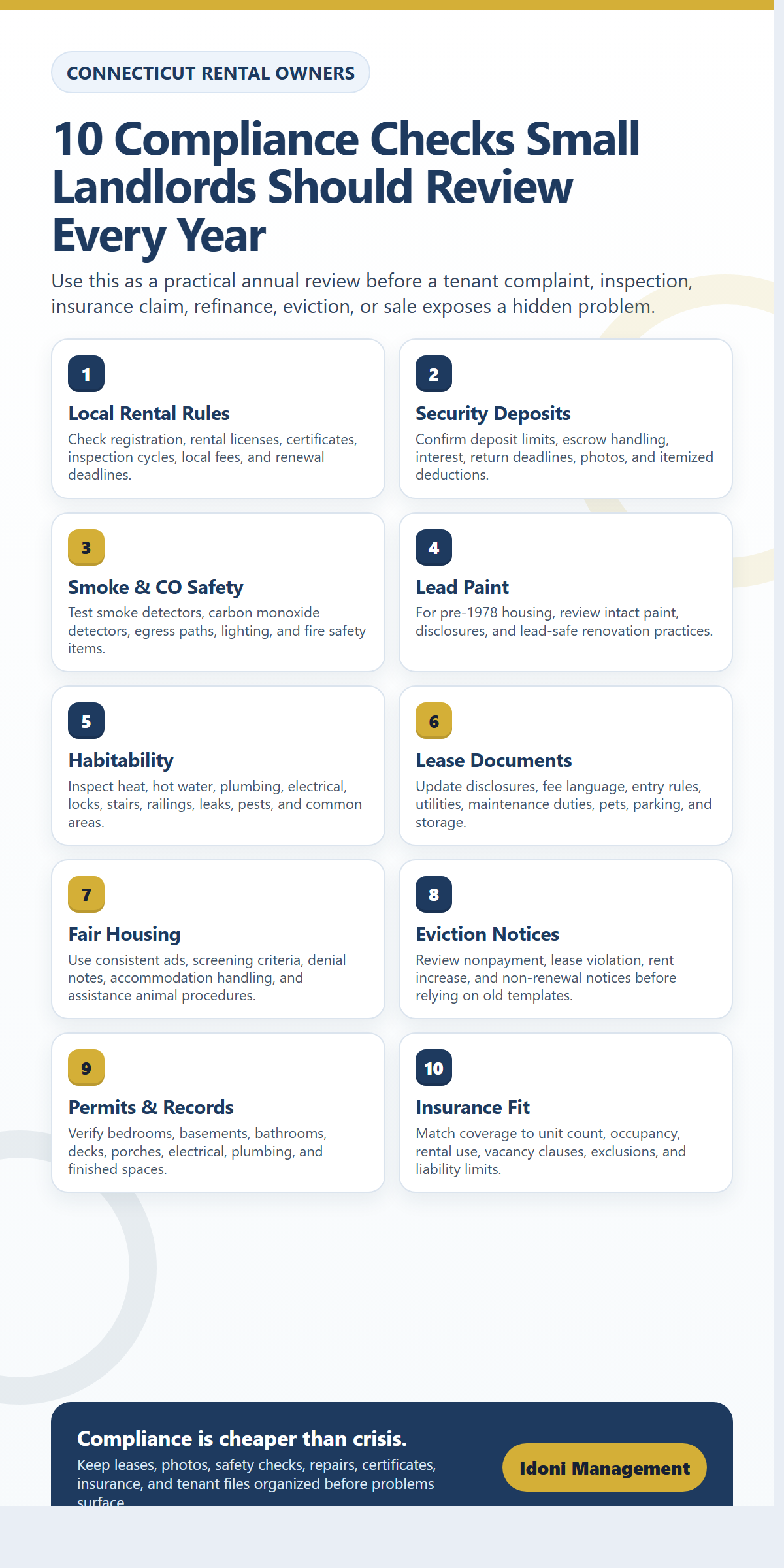
The 10-Point Connecticut Rental Compliance Checklist
Use this checklist as an annual operating review. It is not a substitute for legal advice, but it gives small owners a practical way to spot the issues most likely to cause trouble.
| Compliance area | What to check | Why it matters |
|---|---|---|
| Local rental rules | Registration, rental license, certificate of occupancy, inspection cycle, local fees | Municipal rules can affect legal occupancy and fines |
| Security deposits | Deposit limit, escrow handling, interest, return deadlines, itemized deductions | Deposit mistakes can create double-damages risk |
| Life safety | Smoke detectors, carbon monoxide detectors, fire exits, lighting, clear egress | Safety failures create major liability and insurance problems |
| Lead paint | Pre-1978 housing, intact paint, disclosures, lead-safe renovation practices | Lead issues can trigger health department orders |
| Habitability | Heat, hot water, plumbing, electrical, locks, stairs, railings, pests, leaks | Code complaints can interrupt rent collection and operations |
| Lease documents | Disclosures, fees, entry language, utilities, maintenance, pets, parking | Old templates often conflict with current practice or law |
| Fair housing | Ads, screening criteria, denials, accommodations, assistance animals | Informal screening creates avoidable discrimination risk |
| Eviction notices | Nonpayment process, lease violation notices, documentation, court forms | Bad notices can delay or derail cases |
| Permits | Basements, bedrooms, bathrooms, decks, porches, electrical and plumbing work | Unpermitted work can surface during inspections, sales, and claims |
| Insurance | Unit count, occupancy, vacancy, rental use, exclusions, liability limits | Coverage should match how the property is actually used |
The Compliance Areas Small Owners Should Prioritize
Security Deposits: The Compliance Area Owners Treat Too Casually
Security deposits are one of the easiest areas for small landlords to mishandle because the money feels routine. It is not routine. Connecticut’s Judicial Branch landlord-tenant guide states that security deposits are generally capped at two months’ rent, and at one month’s rent for tenants age 62 or older. It also explains that deposits must be held for the tenant’s benefit, earn interest at a rate set by the Banking Commissioner, and be returned within the required timeline after move-out unless there are lawful deductions.
Owners should confirm that their process covers:
- the correct deposit cap for each tenant
- escrow handling and interest
- move-in and move-out photos
- itemized deductions for unpaid rent or damage beyond ordinary wear
- return deadline tracking
- clear records of forwarding address communications
If this area feels loose, review Idoni’s guide to Connecticut security deposits before the next turnover.
Lead Paint and Safety Checks Are Not Optional Details
Connecticut has a large older housing stock, and many small rental owners own properties built before 1978. The Connecticut Department of Public Health says pre-1978 housing may contain lead paint and that landlords are responsible for keeping painted surfaces intact. The state’s landlord guidance also warns against dry scraping, sanding, and power washing painted surfaces on pre-1978 buildings, and points landlords to federal lead-safe renovation rules for repair and painting work.
A basic lead and safety review should include:
- confirming whether the building was built before 1978
- checking that painted surfaces are intact inside, outside, and in common areas
- using properly certified firms when required for renovation, repair, and painting work
- including required lead disclosures with leases when applicable
- documenting smoke detector and carbon monoxide detector checks
- keeping exits, stairs, halls, and shared areas clear and well lit
This is not just paperwork. If a child under six has an elevated blood lead level, local health officials may inspect the property and issue abatement orders. That is a much harder moment to manage than a proactive maintenance review.
Local Registration, Permits, and Property Records Need Their Own Review
Connecticut compliance is not one-size-fits-all. A rental in Bridgeport may face different local requirements than a rental in Hartford, New Haven, Waterbury, Stamford, or a smaller town. Some municipalities may require rental registration, inspections, certificates, or specific local code corrections.
Owners should call or check the local building, housing, fire marshal, or health department website for:
- rental registration requirements
- certificate of occupancy or rental certificate rules
- periodic inspection programs
- fire safety inspection triggers
- short-term rental or rooming house rules
- records for additions, finished basements, extra bedrooms, decks, and major systems work
Unpermitted work deserves special attention. A basement bedroom, added bathroom, enclosed porch, or attic conversion may seem profitable until a tenant complaint, sale, refinance, or insurance claim exposes that the space was never approved for that use.
2026 Connecticut Compliance Snapshot for Small Owners
The 2026 risk pattern for Connecticut landlords is clear: tenant protections, fair rent scrutiny, local housing code enforcement, and documentation standards keep getting more important. Owners are also operating in a market where insurance carriers, lenders, buyers, and municipalities are asking sharper questions about safety, occupancy, and records.
That matters most for small owners because they often do not have a dedicated compliance calendar. A property may be profitable on paper while carrying hidden exposure in old leases, undocumented repairs, loose screening standards, expired local registrations, or insurance coverage that does not match the property’s real use.
Common Mistakes Connecticut Landlords Make With Compliance
- Using an old lease without review: A lease template from five years ago may not match current law, local requirements, or the way the property is actually managed.
- Assuming state law is the whole story: Local rental registration, inspection, fire safety, and housing code rules can create separate obligations.
- Skipping documentation because the tenant relationship is friendly: Photos, repair logs, notices, and written records matter most when the relationship changes.
- Treating security deposits like normal cash: Deposits have limits, interest rules, return deadlines, and deduction requirements.
- Ignoring pre-1978 paint until there is a complaint: Lead paint issues can escalate quickly, especially when young children live in the unit.
- Copying eviction or rent notice forms from the internet: Bad notices can cost owners time, rent, and leverage. If a tenancy is heading toward court, review the Connecticut eviction process before guessing.
- Screening tenants inconsistently: Informal standards can create fair housing risk. A written, consistent tenant screening process is safer.
What Connecticut Landlords Should Do Next
Small owners do not need to become lawyers. They do need a repeatable system.
- Run one annual compliance audit: Review documents, safety devices, local rules, insurance, permits, and tenant files.
- Create a property file: Keep leases, addenda, move-in photos, repair logs, inspection notes, deposit records, certificates, and insurance documents together.
- Check local rules directly: Do not rely only on another landlord’s advice. Confirm with the municipality.
- Update lease and notice templates: Use Connecticut-specific documents reviewed by a qualified professional.
- Photograph safety checks: Date-stamped photos of smoke detectors, CO detectors, stairs, railings, and exterior hazards are useful records.
- Review insurance annually: Make sure the policy reflects the correct unit count, occupancy, rental use, and exclusions.
- Get help before the issue becomes adversarial: Compliance is easier before there is a tenant complaint, court filing, or claim.
FAQs
What compliance checks should Connecticut landlords do every year?
Connecticut landlords should annually review local rental registration, safety devices, habitability issues, lead paint risk, lease documents, security deposit handling, fair housing practices, permits, insurance, and tenant files.
Do small landlords in Connecticut have to follow the same rules as larger owners?
Often, yes. Some rules may vary by property type, unit count, or municipality, but owning only one or two units does not remove major obligations around habitability, deposits, safety, fair housing, notices, and local code compliance.
Are Connecticut rental registration rules statewide?
No. Rental registration, inspection, certificate, and local housing code programs can vary by city or town. Owners should confirm requirements with the municipality where the rental property is located.
What is the biggest compliance mistake small landlords make?
The biggest mistake is relying on informal habits instead of documented systems. Old leases, casual screening, undocumented repairs, loose deposit handling, and missed local rules usually create the most expensive surprises.
When should a Connecticut landlord get legal or professional help?
Owners should get help before serving eviction notices, responding to code or lead orders, changing lease terms, handling difficult deposit disputes, correcting unpermitted work, or making decisions that could affect tenant rights.
How Idoni Management Can Help
Compliance is easier when it is built into the property management process instead of handled after something goes wrong. Idoni Management helps Connecticut landlords with leasing, documentation, tenant communication, maintenance coordination, safety follow-up, and owner operations across Bridgeport, Hartford, Waterbury, and New Haven.
Over 200 Connecticut landlords trust Idoni Management to handle their rental properties. See what they say or get your free compliance checklist today.
Sources and Further Reading
- Connecticut Judicial Branch: Rights and Responsibilities of Landlords and Tenants in Connecticut
- Connecticut Department of Public Health: Landlords and Lead Paint
- Connecticut Department of Public Health: Lead Poisoning Prevention and Control Program
- Property management services Idoni provides
- Idoni Management pricing
This article is for general educational purposes only and is not legal advice. Connecticut rental compliance can vary by property type, municipality, and specific facts. Owners should consult qualified legal, insurance, and code professionals when making compliance decisions.