

Connecticut Rental Leads But No Qualified Applicants: A Landlord Leasing Funnel Audit
If your Connecticut rental listing is getting views, messages, and tour requests but still not producing qualified applicants, the problem is probably not “the market.” It is usually a gap somewhere in the leasing funnel: pricing, photos, listing copy, response time, prescreening, showing access, income standards, or follow-up. A busy listing can still fail if it attracts the wrong prospects, loses good prospects before they apply, or makes the application process harder than it needs to be.
For landlords in Bridgeport, New Haven, Waterbury, Hartford, Stamford, and surrounding Connecticut markets, the goal is not more leads. The goal is the right leads moving quickly from inquiry to showing to completed application to approval. This audit walks through the most common reasons rental traffic does not turn into qualified tenants and how to tighten the process before vacancy eats into cash flow.
Key Takeaways
- A high-lead, low-application listing usually has a funnel issue, not just a demand issue.
- Pricing can generate clicks while still blocking qualified applicants if the rent is above the local value signal.
- Slow response time is one of the fastest ways to lose strong renters to competing listings.
- Weak prescreening creates busy work by attracting people who were never likely to qualify.
- Showing friction, unclear income standards, and poor follow-up can kill otherwise viable applications.
- The right fix is a leasing audit: measure where prospects are dropping off, then correct that stage first.
Why Connecticut Rentals Get Leads But No Qualified Applicants
A rental lead is not the same thing as a qualified applicant. A lead may be curious, price shopping, unprepared, outside the income range, moving too late, moving too soon, or unwilling to complete the next step.
A qualified applicant is different. They generally have:
- Income that meets the property’s written standard
- Verifiable employment or acceptable income documentation
- A realistic move-in timeline
- Acceptable rental history
- Willingness to complete the application
- Enough interest to schedule and attend a showing
- A clear understanding of rent, fees, deposit, lease terms, and screening criteria
If your listing is producing inquiries but not applications, the funnel is leaking between awareness and action. The fix is to diagnose the exact stage instead of guessing.
For landlords who already understand the basics of tenant screening, this is where operational discipline matters. A screening policy only helps if qualified prospects actually make it to the application stage.
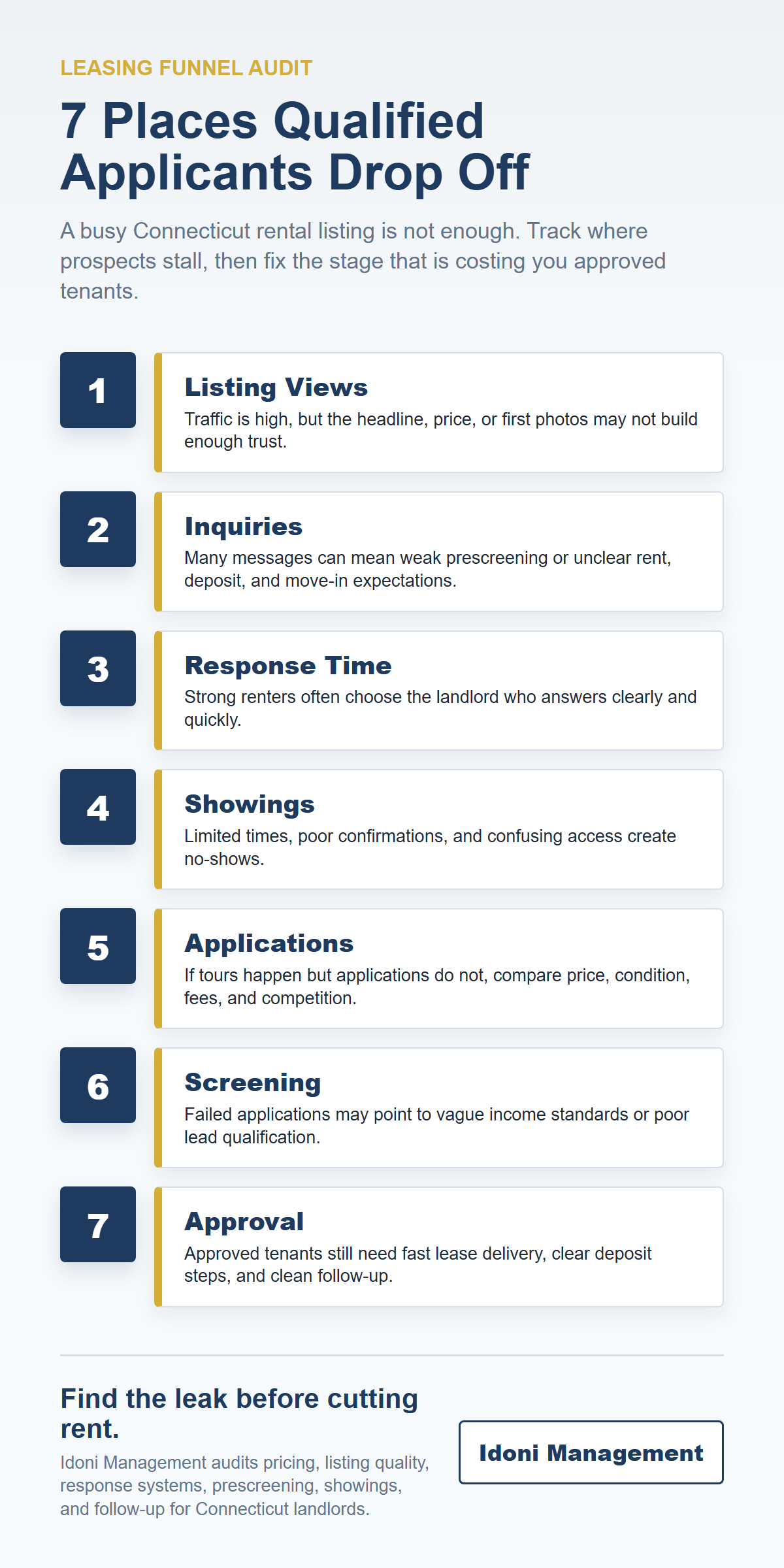
The 7-Point Leasing Funnel Audit
Use this table to identify where the problem is likely happening.
| Funnel Stage | What You See | Likely Problem | What To Check |
|---|---|---|---|
| Listing views | Plenty of traffic, few messages | Photos, headline, price mismatch | Listing photos, first sentence, rent versus similar rentals |
| Inquiries | Many messages, poor fit | Weak prescreening | Income, move-in date, pets, occupancy, voucher policy where applicable |
| Responses | Prospects go quiet | Slow or incomplete replies | Response time, message quality, available showing slots |
| Showings | Tours scheduled, no-shows high | Showing friction or weak confirmation | Scheduling process, reminders, access, prospect motivation |
| Applications | Tours happen, no applications | Price, condition, terms, competition | Rent, fees, property condition, competing listings |
| Screening | Applications fail | Standards are attracting wrong pool | Published criteria, prescreen questions, documentation requirements |
| Approval | Approved tenants do not sign | Follow-up, lease clarity, move-in process | Lease timing, deposit instructions, next-step communication |
The strongest leasing systems do not treat these as separate tasks. They track them as one process.
1. Pricing May Be Creating Curiosity Instead of Commitment
Overpricing does not always mean silence. Sometimes it creates the worst kind of activity: lots of light interest from people who like the photos but hesitate once they compare the rent, fees, location, condition, and move-in cost.
That can look like:
- “Is the rent negotiable?”
- “What is the lowest you will take?”
- “Can I move in with less deposit?”
- “Can you hold it for three weeks?”
- “I want to see it” followed by no application
In Connecticut, small differences matter. A $100 to $200 rent gap can change the applicant pool, especially when renters are comparing older multifamily units, parking, laundry, heat source, commute, and neighborhood-by-neighborhood pricing.
A pricing audit should compare:
- Similar active rentals, not just aspirational listings
- Recently rented units where available
- Unit condition and renovation level
- Parking, laundry, utilities, and storage
- Pet policy and added fees
- Seasonality and days on market
- Total move-in cost, not rent alone
The real question is not “Can someone pay this rent?” It is “Does the right tenant believe this unit is the best value at this rent?”
2. Photos May Be Attracting Clicks But Not Trust
Photos do more than make a unit look nice. They set expectations. If the photos are too few, too dark, too cropped, outdated, or missing key rooms, qualified renters may assume there is a reason.
Weak rental photos often create two problems at once:
- Unqualified prospects inquire because the listing feels vague.
- Qualified prospects skip the listing because they do not trust it enough to schedule.
A Connecticut rental listing should usually show:
- Front exterior
- Kitchen
- Living area
- Each bedroom
- Bathroom
- Laundry area if available
- Parking or driveway if relevant
- Yard, porch, or outdoor space if included
- Any major upgrades
- Any known limitations that affect expectations
Do not hide obvious drawbacks. If a bedroom is small, show it clearly. If parking is street-only, say so. If stairs are steep, disclose it. You will lose some leads, but those were the leads most likely to waste time later.
Good leasing photos do not just increase traffic. They improve fit.
3. Response Time Is Probably Costing You Good Renters
The best applicants often move fast. They are organized, they have documents ready, and they are contacting multiple listings at once. If your response arrives the next day, a strong prospect may already have toured another unit.
A slow response system creates a quiet penalty:
- Good prospects leave.
- Less-prepared prospects keep messaging.
- The landlord feels busy but sees weak applications.
- Vacancy continues.
A strong leasing response should include:
- Confirmation that the unit is still available
- Rent and move-in cost summary
- Basic screening criteria
- Available showing windows
- Application link or next step
- A clear ask: “Which showing time works for you?”
Speed matters, but completeness matters too. A fast vague reply still creates back-and-forth. The goal is to move a qualified renter to the next step without making them chase information.
4. Prescreening Should Filter Without Creating Fair Housing Risk
Prescreening is not about being arbitrary. It is about applying consistent, written criteria before everyone wastes time.
A good prescreen process can ask neutral, business-related questions such as:
- Desired move-in date
- Number of occupants
- Pet information, if pets are considered
- Whether the applicant can document income
- Whether household income meets the stated standard
- Whether the applicant is ready to complete a rental application
- Whether they have viewed the listed rent, deposit, and lease terms
Avoid questions that touch protected classes or steer prospects based on who they are. Keep the process tied to the property, lease terms, written standards, and lawful screening criteria.
If your screening process is loose, your listing may be attracting people who were never going to qualify. If it is too confusing, it may be pushing away people who would.
This is also where strong lease documentation and consistent records help. Leasing decisions should be explainable, consistent, and documented.
5. Income Standards Need To Be Clear Before the Showing
One of the most common landlord mistakes is waiting until after the showing to explain income requirements. That wastes time and creates frustration.
If the standard is three times monthly rent, say that. If co-signers are considered, say when and how. If alternative income documentation is accepted, define what documentation is needed. If the property has a required application fee, disclose it before the showing.
Clarity helps qualified applicants self-select.
A simple income standards block can include:
- Monthly rent
- Required income multiple or income documentation standard
- Accepted documentation types
- Security deposit expectations
- Application fee, if any
- Lease start timing
- Pet fees or restrictions, if applicable
- Utilities paid by tenant versus owner
Connecticut landlords should also make sure deposit handling and lease terms are consistent with state requirements. For a deeper review, see Idoni’s guide to Connecticut security deposit dos and don’ts.
6. Showing Friction Can Kill Qualified Applications
A qualified renter can still drop off if showings are hard to schedule.
Common friction points include:
- Only offering one narrow showing window
- Requiring long phone calls before basic information is shared
- Slow confirmation
- No reminders
- Confusing parking or access instructions
- Occupied units that are not show-ready
- No application link after the tour
- No clear timeline for approval
Showing friction is especially damaging in competitive Connecticut submarkets where renters have other options. If another landlord offers a cleaner process, the renter may choose the easier path even if your unit is comparable.
A cleaner showing process should include:
- Prescreen first
- Offer specific appointment windows
- Send a confirmation message
- Send a reminder the day of the showing
- Include parking/access instructions
- Follow up within a few hours after the tour
- Send the application link with a deadline and next steps
The best leasing machines make the next step obvious.
7. Weak Follow-Up Lets Warm Prospects Go Cold
Many landlords stop after the showing. That is a mistake.
A renter who tours and says “I like it” may still need a nudge, clarification, or deadline. Without follow-up, they drift to another listing.
Good follow-up is short and direct:
- “Thanks for touring today. If you want to move forward, here is the application link.”
- “We are reviewing applications as they come in.”
- “Before applying, please review the income, credit, rental history, and move-in requirements.”
- “Let me know if you have questions about utilities, parking, or lease start date.”
Follow-up should not pressure someone who is not a fit. It should remove ambiguity for someone who is.
Connecticut Rental Market Trends in 2026
Connecticut remains a tight rental market in many areas, but tight demand does not guarantee qualified applications for every listing. Recent Connecticut rental commentary has pointed to low residential vacancy and continued pressure in cities such as New Haven, Bridgeport, Stamford, Hartford, Waterbury, and surrounding commuter markets.
Seasonality still matters. Spring and late summer often produce stronger leasing activity, while winter listings may need sharper pricing, better photos, or more flexible showing availability. In a tight market, a unit that gets traffic but no qualified applications is a signal to inspect the funnel, not assume demand will solve the problem.
Common Mistakes Connecticut Landlords Make With Leasing Leads
- Measuring success by lead count: More leads do not mean better leasing. If the lead pool is weak, volume just creates more messages to answer.
- Posting unclear screening criteria: If renters do not know the income, documentation, move-in, and application requirements, many will inquire before realizing they are not a fit.
- Responding too slowly: Qualified renters often contact multiple properties in one sitting. A delayed reply can lose the best applicants first.
- Hiding property drawbacks: Missing photos, vague utility details, unclear parking, or undisclosed condition issues create distrust and wasted showings.
- Making showings hard: Limited availability, confusing instructions, and poor confirmation systems increase no-shows and reduce applications.
- Treating follow-up as optional: A warm prospect needs a clear next step. If the landlord does not provide one, the prospect may move on.
- Changing standards case by case: Screening standards should be written, consistent, and applied fairly. Improvising creates operational and compliance risk.
What Connecticut Landlords Should Do Next
If your listing is busy but not producing qualified applicants, audit the funnel before cutting rent or reposting the same listing.
Start with this checklist:
- Compare your rent against similar active and recently rented units.
- Review whether your first five listing photos answer the renter’s biggest questions.
- Time how long it takes to respond to a new inquiry.
- Add neutral prescreening questions tied to written criteria.
- Publish basic income, move-in, and application expectations.
- Reduce showing friction with clear windows, reminders, and instructions.
- Track inquiry-to-showing, showing-to-application, and application-to-approval rates.
- Follow up after every qualified showing with an application link and deadline.
- Review whether the lease, deposit, and application process are clean and consistent.
If the listing has been active for more than two weekends with traffic but no qualified applications, do not just wait. Something in the funnel is probably misaligned.
FAQs
Why am I getting rental inquiries but no applications?
The most common reasons are pricing mismatch, unclear screening criteria, slow response time, weak photos, showing friction, or poor follow-up after tours. The listing may be attracting attention without giving qualified renters enough confidence to apply.
Should I lower the rent if my Connecticut rental has lots of leads but no qualified applicants?
Maybe, but do not start there blindly. First check whether qualified renters are dropping off before the showing, after the showing, or during screening. If many prospects like the unit but hesitate after comparing price and condition, pricing may be the issue.
How fast should I respond to rental leads?
As fast as possible, ideally the same day and preferably within hours during active leasing periods. Strong applicants often contact several listings quickly, so delayed responses can cost you the best prospects.
What should I ask before scheduling a rental showing?
Ask neutral, property-related questions: move-in date, number of occupants, pet information if relevant, whether they can document income, and whether they have reviewed the rent, deposit, and lease terms. Keep questions consistent and tied to written criteria.
Why do people tour my rental but not apply?
Common reasons include price versus condition, unclear move-in costs, concerns about parking or utilities, slow post-showing follow-up, or competing listings that feel easier to lease. A post-showing follow-up process can reveal which issue is causing the drop-off.
How Idoni Management Can Help
If your listing is busy but not producing qualified applicants, Idoni can audit the leasing funnel and show where prospects are dropping off. Idoni Management helps Connecticut landlords tighten pricing, listing presentation, response systems, prescreening, showings, applicant follow-up, lease documentation, and move-in coordination across Bridgeport, Hartford, Waterbury, New Haven, and nearby markets.
Over 200 Connecticut landlords trust Idoni Management to handle their rental properties. See what they say or request a leasing funnel audit for your rental.