
How to Rent Out Your House in Connecticut
Renting out your house in Connecticut is straightforward if you follow the state’s specific legal requirements. You need a rental license for most municipalities, proper insurance, a compliant lease agreement, and a legally sound tenant screening process. Before listing, register with your local housing authority, obtain the required inspections, and understand Connecticut’s security deposit limits (up to two months’ rent) and fair housing laws.
This guide walks you through the entire process—from preparation to your first tenant—without the common mistakes that cost new landlords time and money.
Key Takeaways
- Most Connecticut towns require a rental license and inspection before you can legally rent
- Security deposits are capped at two months’ rent; must be held in a separate interest-bearing account
- Fair housing laws protect 14 classes; written screening criteria protects you legally
- Landlord insurance is mandatory; standard homeowner’s policies won’t cover rental activities
- Security deposit returns have strict 30-day deadlines with specific accounting requirements
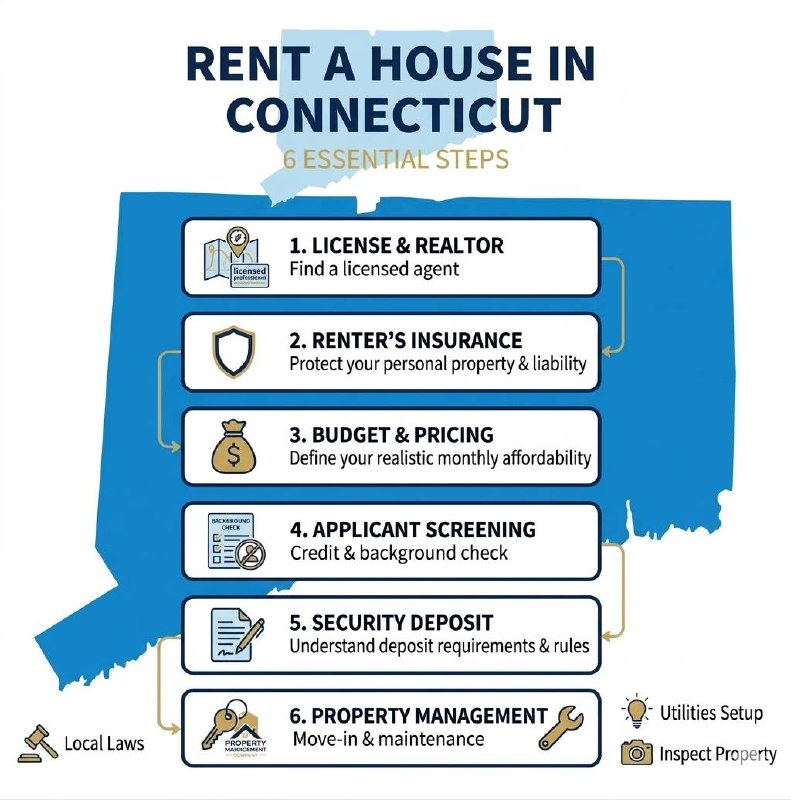
Step 1: Get Your Rental License and Inspections
Connecticut doesn’t handle rental licensing at the state level—it’s municipal. Almost every town with a housing authority requires registration before you can legally advertise or lease your property.
What You’ll Need
- Rental license application (typically $50–$200 depending on municipality)
- Certificate of Compliance inspection (fire safety, egress, lead paint if pre-1978)
- Proof of homeowner’s insurance or landlord policy
- Some towns require a zoning compliance letter
Timeline Reality
Plan for 2–4 weeks. Inspectors are backed up, and if you fail initial inspection for issues like missing smoke/CO detectors or window egress violations, you’ll need re-inspection.
Step 2: Switch to Landlord Insurance
Your standard homeowner’s policy becomes void the moment you rent the property. You need a dwelling policy (DP-3) or landlord insurance that covers:
- Property damage from tenants or perils
- Liability if someone is injured on the property
- Loss of rental income if the property becomes uninhabitable
Get this lined up before listing. If a tenant damages the property and you’re on a homeowner’s policy, your claim will be denied.
Step 3: Set Your Rent Price Competitively
Pricing wrong is the most expensive mistake new landlords make. Price too high, you sit vacant. Price too low, you attract problematic tenants and leave money on the table.
Connecticut Rent Research Checklist
- Check comparable rentals on Zillow, Apartments.com, and Facebook Marketplace
- Factor in your mortgage, taxes, insurance, and maintenance reserve (typically 10%)
- Account for vacancy (5–10% annually is realistic)
- Consider seasonal demand—winter leases in Connecticut often require concessions
| Market Type | Rent Range (2BR) | Days on Market |
|---|---|---|
| Bridgeport | $1,400–$1,800 | 15–30 days |
| Hartford | $1,300–$1,700 | 20–40 days |
| Waterbury | $1,200–$1,600 | 20–35 days |
| New Haven | $1,600–$2,200 | 10–25 days |
Step 4: Create Legally Compliant Screening Criteria
Before you take a single application, write down your screening criteria. Connecticut law requires consistency—if you reject one applicant for credit score but accept another with the same score, you’re exposed to fair housing claims.
Recommended Screening Standards
- Minimum credit score (typically 600–650)
- Income requirement (3x monthly rent gross)
- No evictions in past 3–5 years
- No violent criminal history
- Positive landlord references
Document this. Email it to every applicant before they apply.
Step 5: Use a Connecticut-Compliant Lease
Generic internet leases won’t protect you. Connecticut has specific requirements around:
- Security deposit handling and interest calculations
- Lead paint disclosure (pre-1978 properties)
- Bedbug addendums
- Notice periods for entry (reasonable notice, typically 24 hours)
Your lease must include:
- Exact rent amount, due date, and late fee policy (late fees must be “reasonable”)
- Security deposit amount and where it’s held
- Tenant and landlord responsibilities for maintenance
- Clear procedures for requesting repairs
Step 6: Handle Security Deposits Correctly
Connecticut law is strict here. Violations trigger automatic penalties.
Security Deposit Rules
- Maximum: Two months’ rent (one month if tenant is 62+)
- Holding: Must be in separate interest-bearing account in Connecticut bank
- Interest: Must pay tenant interest annually or apply to rent (minimum 1.5% or bank rate)
- Return: 30 days after lease end, with written itemization of any deductions
Keep detailed move-in condition documentation with photos. Disputes over deposits are the #1 source of small claims lawsuits against landlords.
Step 7: Prepare for Property Management Reality
Self-managing sounds simple until you get the 2 AM no-heat call in January or the tenant who “forgets” rent three months in a row.
Self-Management Checklist
- 24/7 availability for emergencies
- Reliable contractor network (plumber, electrician, HVAC, handyman)
- System for rent collection and accounting
- Process for handling late payments and notices
- Understanding of Connecticut eviction procedures
If you’re out of state, have a demanding job, or own multiple units, professional property management typically pays for itself through reduced vacancy, better tenant quality, and legal compliance.
Common Mistakes Connecticut Landlords Make When Renting Out Their House
Skipping the rental license. Some landlords try to fly under the radar. If a tenant reports you or there’s a code violation, you’ll face fines and potential lease invalidation. Get legal from day one.
Using personal bank accounts. Commingling security deposits with your personal money is illegal in Connecticut and creates major liability. Open separate accounts immediately.
Inconsistent screening. Accepting the first applicant with cash in hand without proper screening leads to 90% of landlord horror stories. Run credit, criminal, and eviction checks on every adult.
DIY repairs on major systems. Connecticut housing codes are strict. Botched electrical or plumbing work fails inspection and exposes you to liability. Use licensed contractors.
Emotional decision-making. This is a business. Letting a tenant “pay late just this once” without proper documentation establishes precedent that’s hard to break.
What Connecticut Landlords Should Do Next
- Contact your town’s housing authority to confirm rental license requirements
- Get three quotes for landlord insurance (compare DP-3 policies)
- Research comparable rents in your specific neighborhood, not just your city
- Draft written screening criteria before listing the property
- Set up separate bank account for security deposits
- Schedule pre-rental inspection to identify maintenance issues
- Decide: self-manage or interview 2–3 property management companies
If you’re weighing professional management, most Connecticut property managers charge 8–12% of monthly rent. For many landlords—especially those out of state or with demanding schedules—that cost is recovered through faster leasing, higher-quality tenants, and legal protection.
FAQs
Do I need a business license to rent out my house in Connecticut?
No state-level business license is required, but most municipalities require a rental license or certificate of compliance. Check with your local housing authority—Bridgeport, Hartford, New Haven, and Waterbury all have specific requirements.
How much should I charge for a security deposit in Connecticut?
Maximum two months’ rent for most tenants, or one month if the tenant is 62 years or older. You cannot charge non-refundable deposits—everything is refundable minus legitimate deductions for damages beyond normal wear and tear.
Can I rent my house without a property manager?
Yes, if you’re local, have flexible availability, and understand Connecticut landlord-tenant law. Many landlords self-manage successfully. However, if you’re out of state, have multiple units, or want to avoid 2 AM emergency calls, professional management is typically worth the cost.
What happens if I don’t return the security deposit in 30 days?
You forfeit the right to keep any of it. Connecticut law requires return within 30 days of lease termination, with written itemization of deductions. Miss the deadline, and you owe the full deposit back regardless of damages.
Should I allow pets?
Pet-friendly properties rent 20–30% faster in Connecticut and command slightly higher rents. Consider pet rent ($25–$50/month) rather than just a deposit. Exclude aggressive breeds for insurance compliance, and require pet references.
How Idoni Management Can Help
Renting out your house in Connecticut involves more than finding a tenant. The legal requirements around deposits, fair housing, and local licensing create real liability for new landlords.
Idoni Management handles rental licensing, compliant lease documentation, professional tenant screening, and 24/7 maintenance coordination for landlords across Bridgeport, Hartford, Waterbury, and New Haven. If you’re considering professional management for your Connecticut rental, we offer free lease reviews and rental pricing analysis.